January 10, 2018

Fixing Social Security is far more important than reducing income taxes

We've just suffered through a lengthy partisan debate about income taxes. The result is lower taxes for corporations which are already doing great as evidenced by soaring stock prices. Even before the newly passed tax reduction, many corporations have so much extra cash that they are buying back shares rather than buying new equipment or hiring more employees. The ultra wealthy got a huge tax reduction in terms of raising the amount of wealth exempt from the estate tax. This increase in the estate tax exemption helps wealthy families maintain their dynasties, further increasing the great divide between the top 1% and the rest of Americans.
The small tax cuts for the middle class will expire and the deficit is ballooning, meaning Congress will start talking about cutting benefits for lower and middle income families. See:
GOP Laying Groundwork To Cut Future Social Security, Medicare, Welfare Outlays
https://www.fa-mag.com/news/gop-laying-groundwork-to-overhaul-entitlement-programs-36060.html
What we really need Congress to do is to "fix" Social Security to ensure its long term viability! "The Social Security Trust Fund is currently projected to deplete its surplus in 2034, and policymakers of all stripes know a reckoning is coming." For some SENSIBLE ideas on how to act, check out the latest from the Center for Retirement Research:
How Social Security Gets Fixed Matters: http://squaredawayblog.bc.edu/squared-away/how-social-security-gets-fixed-matters/

January 9, 2018

GOP Laying Groundwork To Cut Future Social Security, Medicare, Welfare Outlays

Now that the tax bill has been passed, ensuring a skyrocketing federal deficit, you can be sure that federal programs that benefit low and moderate income families are in the gun sights of the Republicans.
"Republican lawmakers aim to make cuts to Social Security, Medicaid and welfare programs, saying such cuts are necessary to pay for tax reform and to reduce the budget deficit. Sen. Marco Rubio, R-Fla., recently gave a broad outline of how the cuts could take shape, saying, 'We don't need to reduce benefits on current retirees or even near-term retirees, but we can make changes for future generations such as mine, and do so in a way that people can prepare for, so the changes will barely be felt.'"
Get details from: 
December 6, 2017

Less Phone, More Nature: 34 Resolutions For a Better 2018

One of my favorite investment writers, Jason Zweig, who writes The Intelligent Investor column for The Wall Street Journal, Shares his suggestions for New Year's resolutions (12/29/17). Zweig advises: "Make all your resolutions in public. The fear of social pressure, whether it materializes or not, will help you keep your word, since you are pledging not just to yourself but to others."
Some of my favorites:
  • Listening to what someone else is saying without hearing what you already think is one of the hardest challenges for the human mind. When you listen, listen as if your life depends on it. Otherwise, you’ll just hear your own words coming out of someone else’s mouth.
  • Be more judgmental about ideas and less judgmental about people.
  • If you think you’re the smartest person in the room, you must not have talked to everybody in the room yet.
  • Never try to get other people to change their minds without first trying to understand why they think the way they do. Never do that without being open to the possibility that the mind that might need to change the most could be your own.
  • Try to take your work more seriously, and yourself less seriously. The more seriously you take your work, the easier it will become to take yourself less seriously; the constant reminders of your ignorance should never cease to amaze you.
  • Tweet less; read more.
  • Talk less; listen more.
Especially the last two!

Read the full list at: http://on.wsj.com/2lsq4Vt

What lies ahead for investors in 2018?

Wall Street Journal columnist Jason Zweig wrote this about the stock market on Jan. 5 in "sure things to happen in 2018":  "long-term returns are likely to be distorted this year. In September and October 2008, the depths of the financial crisis, U.S. stocks fell 9.1% and 16.9%, respectively. This fall, those apocalyptic months will finally be more than 10 years behind us — and, as a result, the long-term return on equities will go up like a rocket."
"In fact, the S&P 500’s 10-year cumulative return would leap from 82.1% at the end of 2017 to 198.3% at the end of this coming November — even if stocks go absolutely nowhere for the first 11 months of 2018, says Howard Silverblatt, senior index analyst at S&P Dow Jones Indices.
That would nearly double the average 10-year gain to 11.5% annually from 6.2%, without even counting dividends."
"Stocks will then look much more attractive in the rear-view mirror, even though nothing will have changed but the calendar. Don’t believe the hype."
Zweig sure knows how to provide perspective on investing!
Source: "Four Things Sure to Happen in Markets During 2018"

Your Favorite Tax Break Isn’t as Great as You Think

"Tax specialists of different political leanings are in surprising agreement about the poor design of top breaks."Laura Saunders writing for The Wall Street Journal (10/20/17).
"The tax breaks Americans love most are actually some of the least effective given their cost.
If these provisions were based solely on what’s best for America, the mortgage interest deduction would end or be tilted toward lower earners, tax specialists say. Health-insurance premiums paid by employers would be taxable. Write-offs for charitable gifts would be tightened, and the deduction for state and local taxes would be limited or ended. Investment incentives, such as the lower rate on long-term capital gains, would be reconfigured.'
"As a result, the $1.3 trillion a year that these and other tax breaks for individuals 'cost' Uncle Sam—that is, taxpayers as a whole—would probably shrink. So would market distortions they encourage: Health-care prices might moderate, and Americans might put less of their savings into homes and more elsewhere."

A"survey of specialists at the Tax Foundation, the Tax Policy Center and the Committee for a Responsible Federal Budget" concluded that the mortgage interest deduction gets a D rating. The "lower rate for long-term capital gains"gets the highest rating of B-. Unfortunately Congress pays more attention to lobbyists than to non-partisan policy analysts.
Most low- and middle-income homeowners don't reap any benefit from the mortgage interest deduction before tax "reform" and far fewer will get a reduction under the new law going into effect in 2018. Too many homebuyers bought a more expensive home than they could afford because real estate agents told them they would save on taxes. Yet most first time homebuyers never benefited at all due to the inflation-indexed standard deduction.


New Year's Resolutions?

Because New Year’s resolutions are easy to make but difficult to keep, financial planner Rick Waechter offers a solution. “Pick one financial planning goal in 2018—just one—and act on it in the first week of the new year.”Or the first month. What are your financial goals? Which is your top priority? Search this blog for suggestions on best financial management practices.
Don't try to change your entire financial life. Pick one critical goal and focus on small steps to reach it.

Buying too big a house is risky

"Tempted to buy the largest house you can afford? More square footage typically means more money—and that means higher mortgage payments, taxes, utilities and maintenance.
Young couples buying a starter home are often coached to get something bigger than they need to anticipate a growing family. Others think large homes have better resale value."
"The larger the house, the more you’ll pay in utility bills, property taxes, insurance and repairs (and the more you’ll have to clean)." writes Robyn Friedman for The Wall Street Journal 12/27/17.
Do you really want to spend your 'spare' time cleaning? Another downside that I learned from experience is that more closet and storage space means accumulating more stuff which translates into junk to sort through or leave for your heirs to deal with at your demise. Since I retired I've been on a cleaning out and getting rid of "stuff" binge. 
Consider alternate uses for the extra money you would fork out from down payment to final mortgage payment and beyond (utilities, maintenance, and property taxes). Some of those fund could be used to invest for retirement, higher education (for yourself or your kids), memorable vacations with loved ones, or charitable giving.
The house you live in is NOT an investment; it's a place to live. If you want to invest, buy a total stock market index fund.
The world doesn't need more McMansions!

So you can't resist a sale?

Don't be a sucker. "We have been brainwashed to see a sale as a thrilling event. It’s not. We’ve been bamboozled," writes Michelle Singletary for The Washington Post.
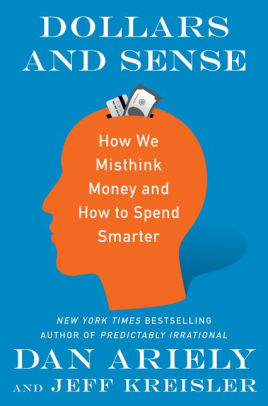
Comedian Jeff Kreisler and his co-author, behavioral economist Dan Ariely, take on the widely held belief that sales save you money in their new book: “Dollars and Sense: How We Misthink Money and How to Spend Smarter,” which challenges a lot of financial assumptions.
Singletary explains: "The authors argue that when we see a sale, we should ignore what the item used to cost. It’s irrelevant. Instead, what we should be doing is considering what else we should or could do with the money we might spend on the sale item."
“Think about transactions in terms of opportunity costs by considering more explicitly what we’re sacrificing for what we’re getting,” they write. “Buying a $60 shirt marked down from $100 isn’t ‘saving $40’; it is spending $60.”
Read more at:https://www.washingtonpost.com/news/get-there/wp/2017/12/28/why-the-money-conscious-should-beware-the-after-christmas-sale/?utm_term=.52c40cad8d8e
or read the authors' new book: Dollars and Sense: How We Misthink Money and How to Spend Smarter
Dollars and Sense: How We Misthink Money and How to Spend Smarter

Inpatient or Outpatient? The classification really matters!

A "patient can be in a hospital for several days under observation, without being formally admitted by a doctor. The stay is considered outpatient care and can include emergency department services, observation services, outpatient surgery, lab tests, X-rays and other various hospital services." The difference in cost between being formally admitted to the hospital or considered "outpatient" can be huge, according to Karen Demasters.
"If a patient is admitted to a hospital for at least three days, the subsequent costs of any nursing home care, including rehab or therapy, is covered by Medicare Part A for the first 20 days and most costs are covered for another 80 days." However, if considered an "outpatient," costs are covered by "Medicare Part B, which only covers 80 percent of most medical expenses. In addition, any subsequent nursing home stay is not covered at all."
While Demaster's article focuses on Medicare-eligible patients, younger persons can also face uninsured medical expenses if they are treated as outpatients. get the details at: https://www.fa-mag.com/news/beware-of-being-in-a-hospital-for--observation-36368.html

January 8, 2018

What will be the impact of the tax cuts?

"The Republican tax law contains disastrous consequences for the US economy, which is ill-equipped for upcoming surprises, says former Treasury Secretary Jack Lew. 'What we've seen is a tax cut that spends money we don't have to have very concentrated benefits for global corporations and the top 1%, and it's leaving us broke,' he says." (Retirement Security Smartbrief, Jan. 3, 2018).
“The next shoe to drop is going to be an attack on the most vulnerable in our society,” Lew said. “How are we going to pay for the deficit caused by the tax cut? We are going to see proposals to cut health insurance for poor people, to take basic food support away from poor people, to attack Medicare and Social Security. One could not have made up a more cynical strategy.”Read the details at Bloomberg politics: https://www.bloomberg.com/news/articles/2018-01-02/former-treasury-secretary-lew-says-tax-cuts-leaving-u-s-broke
Financial Planning for Women does not sell, rent, loan, lease or otherwise provide any personal information collected at our site to any third parties.