Showing posts with label energy efficiency. Show all posts

January 30, 2023

Does rooftop solar make sense for your home?

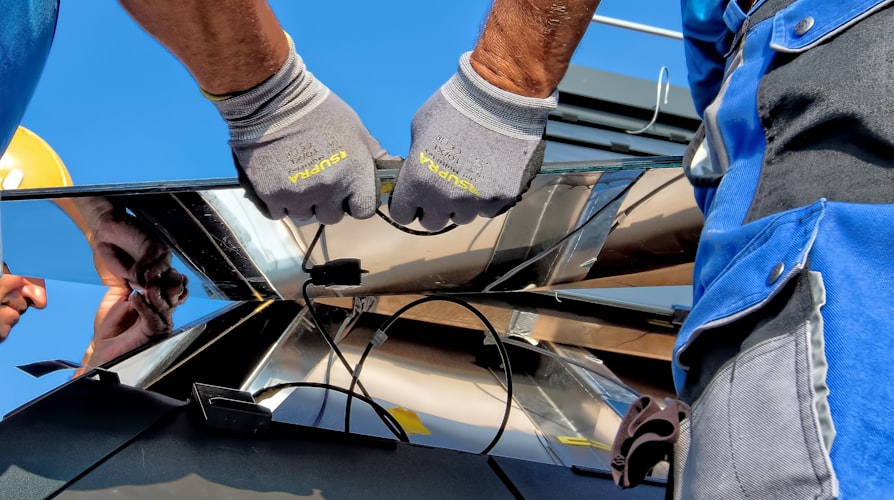
"Does rooftop solar make sense for you or someone you know? If you live in the United States or the U.S. territory of Puerto Rico, you can plug your address into Google’s Project Sunroof calculator and get an instant estimate about how much power you could generate per year if you were to install solar panels onto your roof. The calculator uses satellite imagery of your house, along with weather patterns in your area, to make this estimate."


"The US calculator also lets you zoom out a bit to see what the rooftop solar potential of your state, county, city, or zip code is! In Texas, where I live, it found that 91 percent of buildings are “solar viable.” If all these buildings installed rooftop solar it would reduce emissions by 107 million metric tons, the equivalent of taking 23.3 million passenger cars off the road for one year!"

From climate scientist Katharine Hayhoe's Talking Climate Newsletter. Subscribe at: http://www.katharinehayhoe.com/

December 27, 2022

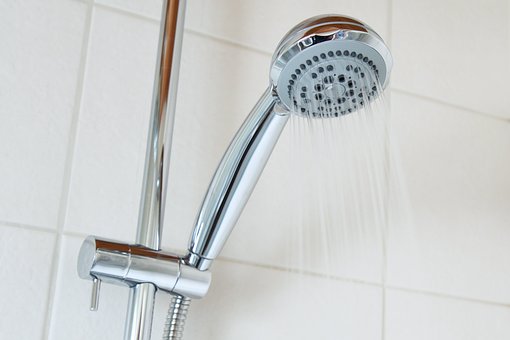
Shorter showers are better for the environment and your skin

As we hear about the skyrocketing cost of energy in Europe, and the fewer, shorter showers many Europeans are taking, it's time to consider the typical American shower.
Reasons why we should take fewer, shorter showers:

#1. It’s better for your skin.
It’s true that long, hot showers may feel restorative, but they can dry and irritate the skin. Hot water strips away natural oils that are needed to keep the skin hydrated.

Warm water rather than hot is better for your skin. After showering, pat yourself dry instead of rubbing vigorously with a towel. Then, apply moisturizers to keep your skin hydrated.

#2. It’s better for the environment and saves money.
For Americans, the average shower lasts about 8 minutes, according to the Environmental Protection Agency. That’s 20 gallons for every average shower, based on the standard showerhead using around 2.5 gallons of water per minute.

You can save a lot of water and energy if you shave off a few minutes of your showertime. Showers rather than baths also helps save water because an average bath uses up 35 to 50 gallons of water.

Other ways of conserving water include replacing your showerhead for one with a WaterSense label. Not only can it help save 2,700 gallons of water per year, but it also reduces demands on water heaters and saves energy—330 kilowatt hours of electricity annually, which is enough to power a house for 11 days.

And instead of waiting for the shower to warm up, collect the water to use on house plants or your yard. You can also read here for other ways to cut your water usage in half.

Source: Consumer Reports

Free photos of Bath


October 26, 2022

Lightbulbs that really save money

With inflation and energy costs taking a bigger bite out of your spending plan, it's time to revisit the basics like replacing incandescent bulbs. Switching from incandescent to LED (light-emitting diode) bulbs could save around $225 in electricity cost per year. Also, LED bulbs last about 25 times longer than incandescents.  

Speaking of lighting... 

Kelvin is a unit to measure the color temperature of lighting, ranging from 2500K (extra warm white) to 6500K (daylight). 

Lumens is a measure of the maximum brightness of a bulb.

450 Lumens = 40 watts ranging to 1,600 Lumens equals 100 Watts. 

Info from the September 2022 Consumer Reports p. 12.

Light Bulb, Light, Glow, Shining, Bulb

October 11, 2020

Savings Rate skyrocketed during Coronavirus: How to use your dividend wisely

 While many Americans are truly suffering from job losses, health related expenses, and the stress of working at home while trying to help children navigate Zoom school, our economy is becoming more divided. For those who can work from home and aren't eating out, traveling, and shopping as they used to, while getting a $1200/adult & $500/child coronavirus "bonus," now is the time to put those extra funds to work. If you haven't already donated to your local food pantry, crisis center, political candidates, etc., consider upgrading your home's (and vehicle's) energy efficiency. 

Another factor to consider is how low interest rates are on savings accounts and money funds: less than 1%. Better to put that money to use in energy savings. 

Now is a great time to upgrade major home appliances to the most energy efficient models of refrigerators, washer-dryers, furnaces, and hot water heaters. Start with the most energy intensive appliances and those that are oldest.

"Heating appliances consume the most energy, according to the U.S. Energy Information Administration."

"In total, these appliances consume about 46% of a home’s electricity. Specifically, air conditioning uses about 17% of your home’s energy, space heating an additional 15%, and water heating uses 14%." https://www.beupp.com/articles/home-appliances-power-breakdown/

The balance between heating an air conditioning obviously depends on where you live.

Consider a tankless hot water heater:  https://www.energy.gov/energysaver/heat-and-cool/water-heating/tankless-or-demand-type-water-heaters

Other benefits of tankless water heaters beside saving energy are: no need to secure a large tank to a firm upright to prevent disaster during an earthquake and think about the outcome when an aging water heater leaks... especially if you are away fromh ome when it happens.

"Because heating and cooling is a huge source of energy consumption, replacing an inefficient furnace or air conditioning unit will save the most energy and money. When purchasing new appliances, you can compare their energy efficiency by checking the yellow tag that displays the appliance’s energy rating." https://www.wisegeek.com/which-home-appliances-use-the-most-energy.htm

With more and more hybrid and electric vehicles coming to the market and expanded charging stations, now is a good time to upgrade to a more energy efficient vehicle. 

Best electric cars of 2020 and 2021: also includes plug-in hybrids: https://www.edmunds.com/electric-car/

Best Electric Cars for 2020 (USN&WR): https://cars.usnews.com/cars-trucks/best-electric-cars

Of course, if you are getting an electric vehicle, you should first invest in roof top solar panels so you aren't burning coal.  


September 12, 2019

Don't wait to install solar panels

"Installing solar panels is expensive, but if you have the money, now might be the time to act. That’s because the investment tax credit, which offers significant deductions for installing a solar energy system, is set to expire soon."

"If your system is hooked up and running before the end of the year, you’ll be able to deduct 30 percent of the installation costs from your tax bill. In 2020, the tax credit will fall to 26 percent. In 2021, it drops to 22 percent, and, in 2022, it will be phased out for residential customers."
Source: NYTimes.com/climate

February 13, 2019

What's the worst thing we do to the earth and how can we atone for our impact?

Why discuss climate change in a personal finance and investing blog?
Because climate disruption is affecting our lives and our finances and imposing massive costs on future generations.
So... what's the worst thing that middle class Americans do? We fly on airplanes. Flying has a large carbon footprint. Besides flying less, we can buy carbon offsets for our flights.
Writing in The Wall Street Journal (2/13/19) Scott McCartney explains that the expansion in air travel has a huge environmental impact. 

Just How Green Are U.S. Airlines? Carriers want fliers to see them as eco-friendly—but while their planes are more efficient, their greenhouse-gas emissions are rising overall

Even though planes are more efficient, more people are flying. Biofuels are a tiny drop in the bucket. So what can a passenger do? 
Buy carbon offsets for your flights.  

"Offsets are credits that enable polluters to avoid cutting their own emissions by investing in projects such as tree planting that take carbon dioxide out of the atmosphere. Many observers see offsets as the key to reducing emissions without crippling U.S. industry with high costs, though some environmentalists worry that certain offset projects won't deliver the promised benefit to the environment." from: Carbon Offsets: A Q&A. What are they? How would they work? And will they really reduce emissions? By Rob Curran

"United and Delta offer carbon calculators and links to making contributions to environmental groups with cash or miles to offset your particular emissions on a trip. Airlines say usage is very low."( So far American, the largest carrier, does not offer an offset program.)
Usage is low because most passengers don't know about them and you really have to search the website to find how to calculate and pay for the offset. 
How much should I expect to pay? One example: a round trip flight between Atlanta and New York would be less than $5. 

April 24, 2016

Cache County, Utah Solar Discount Program


CACHE SOLAR DISCOUNT PROGRAM

Great news! The Cache Solar Discount Program is being extended another year.  The program was a great success in 2015, with 52 residential installations for a total of 776 panels and 215 kW total system capacity. Our first workshop will be held on April 21 at 6:30 P.M. in the City Hall main floor conference room.
                                                                                            
An investment in solar panels can be both affordable and profitable, in addition to being a contribution to a more sustainable energy future. But the initial upfront cost can be a big barrier to many. Did you know that by financing your solar purchase, you can set up your monthly payments to approximate your current electricity billing, creating no additional monthly burden? And at the point when your system is paid off in approximately 8-10 years, the electricity is virtually free. For a typical system, that could represent up to $20,000 back into your pocket over a 30 year period.

The Cache Solar Discount Program is a program sponsored by local non-profit Cache Clean Air Consortium and supported by the City of Logan and Utah State University. The goal of the program is to help bring clean, renewable solar energy to more homes in Cache Valley by simplifying the purchasing process and provide competitive bulk purchase pricing on high-quality PV systems and installation services for homeowners in Cache Valley.
 

April 4, 2013

Make your Home more Energy Efficient

My husband & I installed solar panels in 2012 and were pleased to discover that federal & state tax credits reimbursed half the cost! Solar panel costs are dropping rapidly due to increased production. With almost all of Utah's electricity generated by dirty coal, it's great to reduce that source of air pollution by generating our own electricity. A few years ago we used the credit to install efficient windows and more insulation. The info below is quoted directly from the IRS. 
Get Credit for Making Your Home Energy-Efficient
If you made your home more energy efficient last year, you may qualify for a tax credit on your 2012 federal income tax return. Here is some basic information about home energy credits that you should know.
Non-Business Energy Property Credit
  • You may claim a credit of 10 percent of the cost of certain energy saving property that you added to your main home. This includes the cost of qualified insulation, windows, doors and roofs. 
  • In some cases, you may be able to claim the actual cost of certain qualified energy-efficient property. Each type of property has a different dollar limit. Examples include the cost of qualified water heaters and qualified heating and air conditioning systems.
  • This credit has a maximum lifetime limit of $500. You may only use $200 of this limit for windows.
  • Your main home must be located in the U.S. to qualify for the credit.
  • Not all energy-efficient improvements qualify, so be sure you have the manufacturer’s credit certification statement. It is usually available on the manufacturer’s website or with the product’s packaging.
  • The credit was to expire at the end of 2011. A recent law extended it for two years through the end of 2013.
Residential Energy Efficient Property Credit
  • This tax credit is 30 percent of the cost of alternative energy equipment that you installed on or in your home.
  • Qualified equipment includes solar hot water heaters, solar electric equipment and wind turbines.
  • There is no limit on the amount of credit available for most types of property. If your credit is more than the tax you owe, you can carry forward the unused portion of this credit to next year’s tax return.
  • You must install qualifying equipment in connection with your home located in the United States. It does not have to be your main home.
  • The credit is available through 2016.
Use Form 5695, Residential Energy Credits, to claim these credits. You can get Form 5695 at IRS.gov or order it by calling 1-800-TAX-FORM (800-829-3676).
Financial Planning for Women does not sell, rent, loan, lease or otherwise provide any personal information collected at our site to any third parties.