Showing posts with label consumer info. Show all posts

January 20, 2023

Shampoo/Conditioner bars are better for the environment and your wallet

Does your shower look like a plastic bottle-filled hoarder’s nest?

In the US alone, 550 million shampoo bottles are thrown away each year! That’s enough to fill 1,164 football fields. 

Crazy right? To make matters worse, that figure doesn’t even include conditioner, body wash, or face wash bottles. And given that only 5% of plastic in the U.S. gets recycled, that’s a disturbing amount of forever passengers in our landfills and dumps. 

There are other downsides to using conventional, plastic-bottle brands too: 

  • Many of these products are filled with up to 80% water, so you’re also paying for an unnecessarily large bottle and additional shipping weight.
  • They can contain detergents called sulfates, which can be overly harsh and drying, especially if you have color-treated, dry, or curly hair. Do you really want to wash your hair with the same ingredient that’s in toilet cleaner?
  • They contain synthetic fragrances, which can cause skin irritation and are linked to hormone disruption. 

There is new approach to shampoo that’s better for your health, the environment, and your wallet: shampoo and conditioner (all-in-one) bars

  • The bars are plant-based, vegan, and non-toxic.
  • They are suitable for all hair types, including color-treated.
  • They use recycled and recyclable packaging.
  • Their bars have an 80 to 90% lower carbon footprint than comparable liquid shampoo and conditioner.
  • They’re also TSA-friendly and perfect for travel.

One shampoo/conditioner bar is equivalent to 2-3 standard 8.4 oz bottles of conventional shampoo. One bar will last for months.

Source: https://www.thecooldown.com/
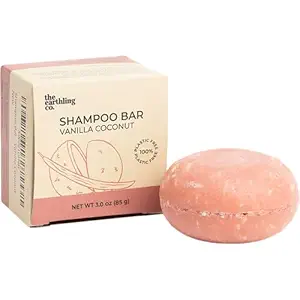
The Earthling Co. Shampoo Bar Vanilla Coconut - Plant Based Hair Shampoo For All Hair Types - Paraben, Silicone, and Sulfate Free Shampoo Bar for Men, Women, and Kids - Low Waste and Zero Plastic


June 29, 2021

Who is more susceptible to financial scams: Seniors or young adults?

 We all know that financial scams target seniors and that they are the most susceptible to the bait. Right? think again...

"Stop it with the ageism and delusions of invincibility. Young adults often don’t recognize the bad checks coming at them, or fake job offers, either" writes Ron Lieber for The New York Times.

"For years now, the Better Business Bureau’s survey research has shown that younger adults lose money to swindlers much more often than the older people you may think of as the stereotypical victims. The Federal Trade Commission reports similar figures, with 44 percent of people ages 20 to 29 losing money to fraud, more than double the 20 percent of people ages 70 to 79."

It's not the Nigerian prince or pfishing scam. "The targeted activities vary widely, from the online shopping that these victims may do nearly every day to their once-in-a-blue-moon handling of paper checks. Illegal schemes also target the student debt payments they must make and the jobs they seek to afford them."

"Pet and pet-supply scams have historically made up 25 percent of the online purchase scams reported to the Better Business Bureau."

"Given its size, con artists try to impersonate Amazon more often than any other company’s brand."


June 17, 2021

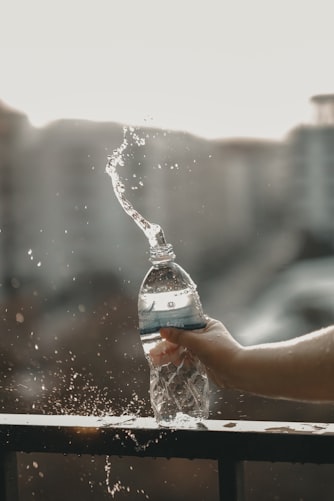
How much are you spending on bottled water?

The Story of Bottled Water

For those of us who remember life without bottled water, it is sad, pathetic, and frustrating when consumers spend money on water packed in a throw away plastic bottle. The bottle is made from petroleum and shipped across the country (wasting more petroleum), and then 80% of the bottles end up in landfills or incinerators. Even worse, much of the supposedly recycled bottles are shipped to developing nations like India (wasting more petroleum in the process) where they add to the pollution problem. While consumers routinely claim to be immune to advertising, bottled water is a classic example of “manufactured demand,” using scare techniques and images of pure fantasy to entice buyers. Pepsi’s Aquafina and Coke’s Desani are simply filtered tap water sold at 2,000 times the price of tap water! Despite its advertising claims and images of pristine sources, Fiji water is lower quality than Cleveland’s tap water. Imagine paying 2,000 times the price of gas for your car! Yet consumers succumb to this insanity daily. 

Logan, UT has some of purest water on the planet coming out of our taps. Don’t be a schmuck. 

Save your money and the environment; use a steel water bottle. 

Watch the 8 minute video and kick the bottled water habit: http://storyofstuff.org/movies/story-of-bottled-water/

May 1, 2020

Airlines where refunds don't fly

Thanks to The Middle Seat columnist for The Wall Street Journal, Scott McCartney, we know the which airlines to avoid in the future when we start flying again. And for those who are sitting with a voucher that will expire, it's time to pressure the airlines to refund your fare.
When a passenger cancels a non-refundable ticket, the airline offers a voucher (with an expiration date) for future travel.  When the airline cancels a domestic flight, passengers are entitled to a refund... as in cash. But with the current financial catastrophe some airlines are denying or delaying refunds. You have to subscribe to the WSJ to read the full article; I'll mention the current practices of major US airlines.
Full refund available:
Alaska
American
Delta
Hawaiian
JetBlue
Southwest

With Spirit and Sun Country, you have to call and request/demand a refund.

On the bad guys list (Strings attached and you may have to be persuasive and persistent): United. It will offer no refund if it rebooks you on a flight within 6 hours of the original schedule).

Policies of lots more airlines are described in the April 30, 2020 article.

October 27, 2019

Amazon sells clothes from factories other stores shun

"After a 2103 factory collapse killed more than 1,100 people in Bangladesh, most of the biggest U.S. apparel retailers joined safety-monitoring groups that required tham to stop selling clothing from factories that violated certain safety standards" according to Wall Street Journal writers J. Scheck, J. Emont, and A. Berzon (front page WSJ 10/24/19). Except Amazon which sells clothing from dozens of Bangladesh factories that violate basic safety for employees.
So please... think twice before buying clothing on Amazon.

October 23, 2019

Why waste money on bottled water?

Almost all Americans have access to clean water. According to Consumer Reports, More than 90% of Americans on municipal systems have pure water. Yet we spend more than $30 BILLION per year on water that is no cleaner than our tap water. In fact, numerous bottled water companies (Aquafina and Dasani)draw their water from municipal supplies! Just think was $30 billion dollars could buy!

As I often pick up trash along sidewalks, hiking trails and bike paths, the most common litter is plastic water bottles. While supposedly recyclable, the market for plastic recycling has almost evaporated since China decided to stop importing our waste.

All the microplastics going into our bodies and the environment is another reason to use a refillable water bottle.

Check out the November 2019 issue of Consumer Reports with its special report: "Is bottled water safe?"

May 27, 2019

Who pays for Trump's tariffs? You do of course!

Here is one example from Planet Money that illustrates the point:

"In early 2018, after the American company Whirlpool complained about foreign competition, the Trump administration implemented tariffs on washing machines imported from all over the world. It’s a 20% tariff on the first 1.2 million washing machines sold a year and a 50% tariff on every one after that."

"While these tariffs were imposed on foreign manufacturers, the study by Flaaen, Hortaçsu, and Tintelnot, like study after study before it, finds it’s ultimately U.S. consumers who pay. New washing machines in America got about 12% more expensive. That’s not too surprising."

"What is surprising is that dryers also got more expensive even though they weren’t subject to the tariff. That’s because washers and dryers are in econospeak “complementary goods.” They are more valuable together and are typically bought at the same time. “Before the tariffs, most manufacturers were pricing paired washer and dryer models at the exact same sticker price,” Felix Tintelnot, a co-author of the study, says. “This pricing strategy was maintained after the tariffs… so the full effect of tariffs on prices is only visible after factoring in the price of the complementary good – dryers.”

"The clear losers in the study are Americans who needed to buy a washing machine or dryer in the last couple years. But, because the tariffs made foreign washing machines more expensive, it made American-made washing machines more appealing — and it convinced LG, Samsung, and Whirlpool to create about 1,800 jobs making washing machines and dryers in the US. Cool, right? Not really. After taking into account the extra money paid for these appliances because of the tariff, those 1,800 jobs ended up costing Americans about $815,000 per job every year."

Get more details and examples at: https://www.npr.org/sections/money/2019/05/21/725135293/more-tariffs-on-china-more-head-scratching-from-economists?utm_source=npr_newsletter&utm_medium=email&utm_content=20190521&utm_campaign=money&utm_term=nprnews

Bottom Line: Trump's Tariffs hurt U.S. consumers! 

May 25, 2019

Trump's tariffs cost US consumers $106 billion per year. Your cost: $831/year

"US tariffs recently imposed on goods from China will cost American households $106 billion annually, according to a report from the Federal Reserve Bank of New York. These tariffs likely will reduce overall tariff revenue collected by the US and will "create large economic distortions," the report said." 
Tariffs are a hidden tax on consumer purchasing power.

Trump's China tariffs hike will cost average U.S. family $831 a year

  • Higher U.S. tariffs on Chinese goods are "likely to create large economic distortions and reduce U.S. tariff revenues," according to economists at the New York Federal Reserve. 
  • The latest round of 25% tariffs on $200 billion in certain Chinese imports will cost U.S. households $106 billion a year, or $831 for the average family, New York Fed researchers found.
  • Tens of billions in recent stock-market losses reflect worries that U.S. trade friction with China isn't going away soon.  https://www.cbsnews.com/news/trumps-china-tariffs-hike-will-cost-typical-u-s-family-831-a-year-fed-economists-say/

Invest that $800 each year for 10 years in an Individual Retirement Account (IRA) or 401(k) at a modest 4% return for a total of $11,173. Use an online calculator to make your own estimates:
http://moneychimp.com/calculator/compound_interest_calculator.htm

March 14, 2019

Wells Fargo CEO got 5% pay raise despite all the company's anti-consumer & illegal behavior!

The Wall Street Journal (3/14/19) reports that Wells Fargo CEO Timothy Sloan received (note I did not use the verb "earned") "$18.4 million in compensation for 2018, including a $2 million incentive award."
WOW! Can you believe #1 that level of compensation and #2 in the face of all the illegal and anti-consumer practices of that nefarious company? Writer Maria Armental also reports: "The pay disclosure comes a day after the San Francisco bank received a rare rebuke from a top regulator, minutes after Mr. Sloan finished testifying before Congress, and as regulators consider whether to force out top executives or directors."
Yikes! Get rid of those guys! It's time for a clean sweep at WF. If you aren't familiar with all the many misdeeds and misbehaviors of Wells Fargo executives, simply search online for "Wells Fargo Scandals."
And we wonder why we have an escalating gap between the 1% and the rest of us!
WF execs and board members are probably the same people who argue against raising the minimum wage!
If you are STILL a Wells Fargo customer... WHY?!?

March 5, 2019

Trump's tariffs and trade wars are costing consumers and businesses


“President Donald Trump regularly declares that he’s winning his trade wars. Yet evidence is growing that the U.S. economy is a net loser so far."


Writing for Bloomburg News,Shawn Donnan reports: "economists from the Federal Reserve Bank of New York, Princeton University and Columbia University found that tariffs imposed last year by Trump on products ranging from washing machines and steel to some US$250 billion in Chinese imports were costing U.S. companies and consumers US$3 billion a month in additional tax costs and companies a further US$1.4 billion in deadweight losses. They also were causing the diversion of US$165 billion a year in trade leading to significant costs for companies having to reorganize supply chains."


"Significantly, the analysis of import price data by Mary Amiti, Stephen Redding and David Weinstein also found that almost all of the cost of the tariffs was being paid by U.S. consumers and companies. That contradicts Trump’s claim that China is paying the tariffs."
   
This policy is the "worst-case scenario" for consumers.

Financial Planning for Women does not sell, rent, loan, lease or otherwise provide any personal information collected at our site to any third parties.