Showing posts with label risk tolerance. Show all posts

June 1, 2020

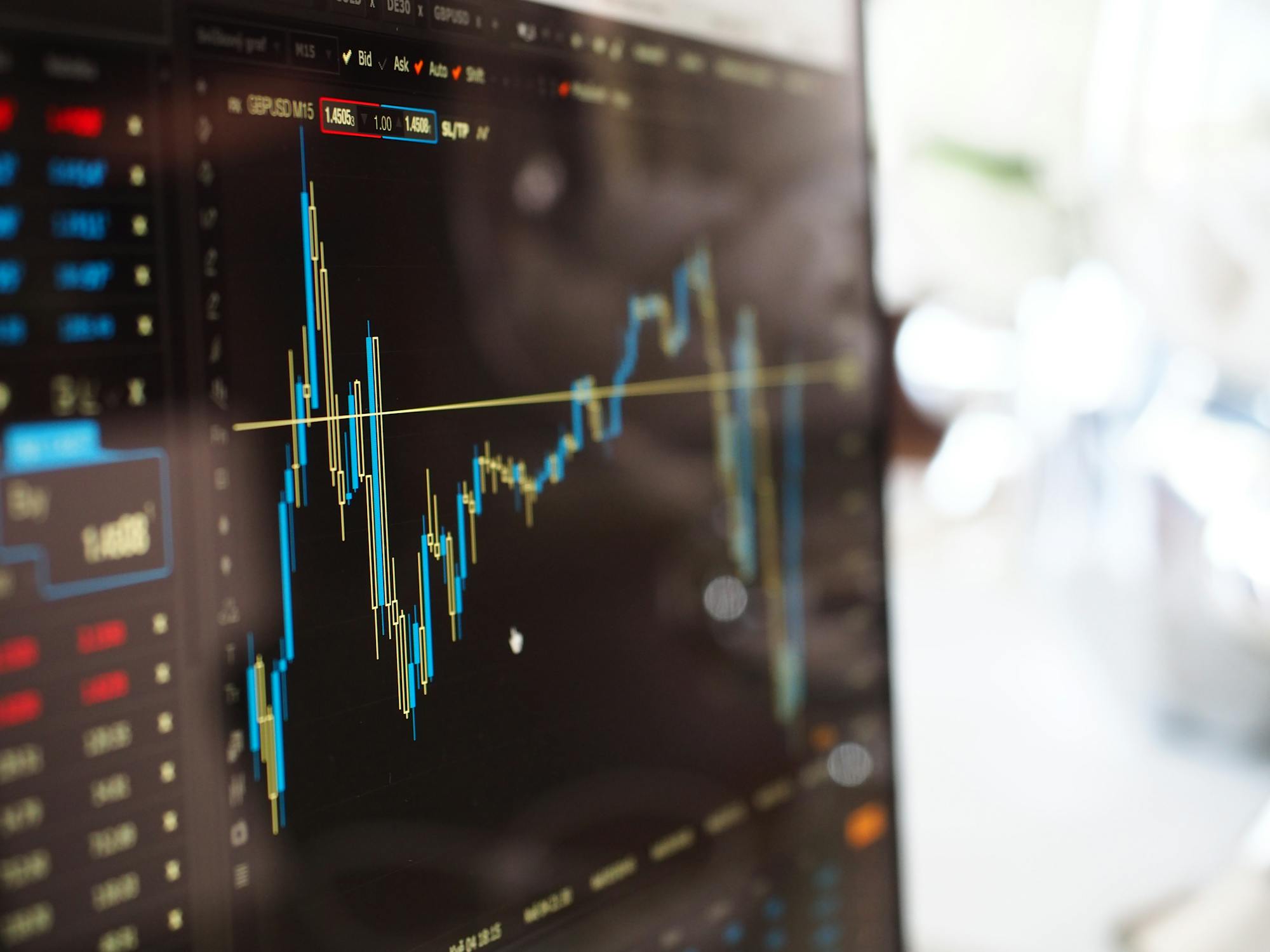
What's happening in the stock market during coronavirus?

    THROUGH THE END OF MAY - The S&P 500 is down 5.0% YTD (total return) through 5/29/20. Just 121 stocks in the index are up YTD. The S&P 500 consists of 500 stocks chosen for market size, liquidity and industry group representation. It is a market value weighted index with each stock's weight in the index proportionate to its market value (source: BTN Research).  

TRILLIONS - From its 2/19/20 stock market high, US stocks lost $12.7 trillion in market capitalization through the stock market low close on 3/23/20. From its 3/23/20 low point, US stocks have gained $8.8 trillion in market capitalization through the close of trading last Friday 5/29/20 (source: Wilshire).   Source:

David Swapp, CFP®
801-566-6639 | david@networthadvice.com
Bottom line: DON"T try to time the market. Decide on your long term goals and tolerance for variability and stick with your chosen asset allocation.  

April 25, 2020

How to survive a bear market

https://www.pexels.com/photo/animal-animal-photography-bear-black-and-white-598966/
"Investors can survive a bear market the same way hikers survive an encounter with a bear: Remain calm and don't make sudden moves" as Wall Street Journal writer Jason Zweig advised on April 4-5, 2020.
See: Staying safe around bears: https://www.nps.gov/subjects/bears/safety.htm

Consider your entire portfolio, including your human capital and Social Security benefits.
as Zweig explains: "your expected social Security payments are like a giant phantom annuity."  Any defined benefit pension plan is a similar (but not inflation-adjusted) annuity. Thus, your total portfolio is bigger than your 401(k) statement and less exposed to the stock market.

Don't know what an annuity is? Search this blog for the answers. 

Now may be a good time to consider converting  traditonal IRA to a Roth IRA, paying taxes now for tax-free income in the future.

How I learned to stop worrying and love the bear market

Spencer Jakab, writing for The Wall Street Journal (3/28-29/20) explains:

A surprising share of a new bull market’s returns pile up in its very early stages, when the average investor is at their most fearful 

https://www.pexels.com/photo/woman-carrying-bear-plush-toy-inside-store-1860160/"Investor psychology in a major bear market is a mirror image of what it was the past few years: The more false alarms there were on the way up, the likelier investors were to embrace risk, viewing dips as buying opportunities. On the way down, so-called suckers’ rallies... get our hopes up and then crush them."

"A surprising share of a new bull market’s returns pile up in its very early stages when people are most fearful. Take the one that ended last month. Putting $100,000 into an S&P 500 index fund on the day the bull began on March 9, 2009 and selling at last month’s peak would have seen that turn into $630,000 including dividends. Waiting just three months to make sure it wasn’t yet another head fake would have earned you only $450,000."

"If you wait for happy headlines or hopeful government statistics for a clue for when to pounce, you’ll be too late. Stocks typically rally before a recession is over." 

"Making lemonade out of the market’s lemons sounds tempting, but it isn’t easy. The old saw goes that the stock market is the only one where people run away when there’s a sale. Beforehand they crowd in when the wares are most expensive because they see everyone else getting rich. For example, in the 10 months leading up to the last market peak in October 2007, a net $84 billion flowed into equity mutual funds according to the Investment Company Institute. By contrast, a net $233 billion flowed out from June 2008 through March 2009, the heart of the bear market when stocks became screaming bargains."

"If the last month truly convinced you that you had too much money in stocks to sleep well at night then take your lumps and dial back your risk permanently. But if you’re merely waiting for a sign that it’s safe to buy again then just hold your nose, increase your allocation to equities, and learn to love bear markets."

So you think you're going to time the market and jump in when things look good

https://www.pexels.com/photo/black-and-white-dartboard-1552617/
Forget about it! The stock market lurches up and down in dramatic gains and losses with no warning!
No bell rings at the bottom of the market signaling it's time to buy!
Some recent examples, among the gut wrenching downward drops:
March 27, 2020 the Dow Jones Industrial Average jumped 12.8%! in one day!
April 9, 2020: the DJIA leaped 12.7%.
This was the index's best rally since 1974 (before many investors were born).
there were only 7 days in all of the stock market history that the market rose at a faster rate.
The stock market (whether measured by the DJIA or the broader S&P 500 largest companies) can swing wildly in one day. It does not increase or decrease gradually. Due to computerized trading, it's NOT individual investors or individual professionals deciding to buy or sell on any given day. So much of trading is based on algorithms that automatically buy and sell based on computer models.

So... what does this mean for individual investors:
Don't have money in the stock market that you will need in the next 5 years.
Have a serious talk with yourself about your risk tolerance, time horizon, investment goals, and, especially for retirement investors, your capacity for risk.
Risk capacity is different from risk tolerance. How secure is your job? does your spouse/partner have a secure income? are you single? Do you have a mortgage? How much debt do you owe?
Besides, plenty of evidence has demonstrated that investor risk tolerance is NOT stable but increases with rising (bull) markets and plummets with falling (bear) markets. Those risk tolerance quizzes that investment pros require you to fill out... not worth the paper they are printed on.
What did you do with your investments during the financial crisis of 2008-09? 
Don't make short sighted decisions based on the hype of today's stock market report.

Remember that investment losses inflict twice as much pain as similar dollar amounts of gain provide pleasure. Losses hurt twice as much as gains feel good, even when the potential loss is relatively small and doesn't pose much risk.  This is the concept of Loss Aversion. Loss aversion explains why too many investors sell at the bottom of the market and wait to resume investing until prices have risen, often above what they sold their investments for in order to avoid a loss. They locked in a loss by not understanding their own risk tolerance and investment psychology.
A market decline is an opportunity to buy stocks when they are on sale. Why is it that individual investors love to buy when stocks are overpriced? Buy a case load when the product is on sale.

Instead of trying to time the market, invest a set amount each month to add to your portfolio, regardless of the price. Practice dollar cost averaging. 

Work with a trusted financial adviser who is a fiduciary and committed to putting the client's needs above their own.
Determine a realistic asset allocation for the long run and stay the course. 
P.S. Good luck with that!

April 9, 2020

Investing Facts of Life


Facts of Life
Jonathan Clements  |  April 4, 2020
THE PLOT, THE SCRIPT and the characters may have changed. But we’ve seen this movie before.
The current stock market swoon strikes many folks as unprecedented: It’s the frantic financial sideshow to a devastating global tragedy—one that’s seen 1.1 million people fall ill and 60,000 die, with every expectation that the numbers will be many multiples worse before the COVID-19 pandemic is over.
Yet, on closer inspection, 2020’s bear market doesn’t seem so different from earlier market declines. Once again, we’re being reminded of some crucial facts of financial life. Here are seven of them:
1. Our risk tolerance isn’t stable.
2. Losses wreak havoc with compounding.
3. In Treasurys, we should trust.
4. Bonds are less risky than stocks—except when we go to trade.
5. If we wait for stocks to get cheap before buying, we’ll likely wait an awfully long time.
6. To earn handsome long-run returns, we must run the risk of severe short-term losses—and those losses occur with brutal regularity.
7. If an investment offers high expected returns, there must be high risk—even if we can’t figure out what that risk is.

Read Clements full comments on his blog which I highly recommend. 

August 16, 2019

How much of your portfolio should be invested in stocks in pre-retirement and in early retirement?

The stock market has been extremely volatile in past few weeks. How much volatility can you tolerate on the verge of retirement?
Investors getting ready to retire should have no more than 60% of their portfolios in stocks, writes John Coumarianos, a former Morningstar analyst. A simulation showed that a person retiring in 2000 with $500,000 saved and withdrawing 4% annually would have $424,000 left in 2018 at 60% stocks, $508,000 at 30% stocks, and less than $200,000 left if fully invested in stocks.
Other analyses suggest that pre- and early retirees should have no more than 30-40% invested in stocks. Keep in mind that we are in the longest bull market in history. That doesn't mean a bear market is around the corner but... what if it is? Could you stand to lose (at least on paper and in the short run) up to 50% of your stock portfolio? especially if you have no guaranteed pension?
Time to review your asset allocation and recognize that your tolerance for risk is not as high as you think it is. 

August 15, 2019

Big drop in investment values in mid-August

Investment performance indexes across the world dropped 3% or more on August 14, 2019. Now is a good time to revisit your asset allocation and risk tolerance in relation to the time horizon for your investment goals.
Numerous studies and the experience of many financial advisors confirms that investors think they have a high tolerance for volatility and risk... as long as markets are going up. But the same people often freak out when big drops occur, confirming that their tolerance for risk is much lower than they thought.
Of course, losses are only on paper (or online) until you actually sell.
How soon will you need your money? No one knows when the next large drop will occur. We are experiencing the longest bull market in history. How long can it last, especially with the current president's crazy trade policies and erratic national policies.
Time to check out some of my blog posts on asset allocation and risk tolerance.

April 6, 2016

January 11, 2016

How much investment risk can you tolerate?

According to Manisha Thakor, director of wealth strategies for women at Buckingham and the BAM Alliance, "individuals who had a clear, concise and documented investment plan were least likely to have knee-jerk, counterproductive reactions to market volatility."
An investment policy statement should address five points:
• "Your target asset allocations for stocks, bonds and hard assets."
•"Your trigger points for rebalancing (for example, moves of plus or minus 5% for major asset classes, and plus or minus 25% for subclasses)."
• "Clarity about where cash flows will come from to fund daily living expenses, which helps reduce fear when portfolio values decrease."
• "An understanding of your willingness, ability and need to take risk so you understand why you are subjecting yourself to this volatility."
• "Specific goals for your portfolio so you can link the need for discipline with the outcomes that long-term, successful portfolio management produces."
Source: The Wall Street Journal, January 11, 2016, R11. 

September 10, 2014

Women & Investment Risk

"Why (retired) women need to take more investment risk." Although focusing on retired women, Eleanor Blayney's advice to women on the need to take a modest amount of investment risk applies to women of all ages. You could never keep up with inflation by putting all your money in federally insured savings vehicles. Blayney is consumer advocate for the Certified Financial Planner Board of Standards. Read her short, succinct article at: http://blogs.wsj.com/experts/2014/09/09/why-retired-women-need-to-take-more-investment-risks/

March 21, 2013

Buy High; Sell Low...

is what investors really do rather than the recommended "buy low, sell high," according to research by the University of Michigan Retirement Research Center.
"Repeated loud warnings by financial advisers fail to reverse the human tendency to panic when the market plunges and to rush in after it’s gone up."
"Withdrawals from 401(k)s and IRAs surged between 2001 and 2003 after high-tech stocks declined, but the money went back in in 2005 through 2007 after the S&P500 index had soared nearly 27 percent in 2003 and 9 percent in 2004, according to new research by Thomas Bridges, a graduate student in economics, and Professor Frank Stafford, for the University of Michigan Retirement Research Center. Read the details at the Squared Away Blog:

What to do? Know your risk tolerance (did you panic and sell in 2008-09?), put your investing on auto-pilot and recognize that the stock market (and other investments) can fluctuate radically. Don't invest in stocks if your time horizon is less than 5 years.

Financial Planning for Women does not sell, rent, loan, lease or otherwise provide any personal information collected at our site to any third parties.