Showing posts with label spending plan. Show all posts

March 2, 2024

The Ultimate Guide to Budgeting

 I MUCH prefer the term "Spending Plan' to Budget but the same concepts apply. Having a spending plan and following it regularly is essential to creating financial stability and reaching your goals. There are SO many ways to set up a spending plan, many using phone apps or computer programs. But frankly, a paper and pencil plan can be just as effective and easier to implement. Simpler is better than more complex and more likely to actually be used.

Writing for Money Geek,

Read the full article at:  https://www.moneygeek.com/financial-planning/resources/guide-to-getting-on-a-budget/ 


January 30, 2024

"Loud Budgeting" started as a joke

"Making a public declaration to rein in spending helps tighter budgets stick... an idea supported by behavioral economics research," according to an article by Oyin Adedoyin in The Wall Street Journal. 

This concept of declaring your intentions to change behavior is similar to sticking to your New Year's resolutions to get more exercise. While not a new concept, the idea is to let those close to you know your goals so they will help hold you accountable... for your spending and your exercise. Advertising your spending goals with others serves as a commitment device. 

"Loud budgeting began as a joke, said Lukas Battle, the 26-year-old comedian who coined the term in a December TikTok video after a night of over-spending." it is a way to push back against peer pressure to overspend when doing it just to get along and go along with your crowd. 

Maybe it's time to get loud with your financial goals for 2024.

BTW, I dislike the word "budget," and much prefer a "spending plan."

October 26, 2021

Thinking of upgrading to a new phone?

"Buying a $1,000 iPhone can be equivalent to giving up $17,000 in retirement savings or 2,500 cups of coffee" according to Brian X. Chen, writing for The New York Times

Although buying a new iPhone of other top of the line phone might just cost the equivalent of buying a coffee a day for a year, financially astute readers might do some easy math and discover that the $700-$1,000 invested in a retirement account today could grow to about $17,000 in 30 years!

Consider that fewer than half of Americans have adequate emergency savings but many will upgrade their phones every year or two.

"Suze Orman, the financial adviser who once famously equated people’s coffee habits to 'peeing $1 million down the drain.' The seemingly small amount of money that people mindlessly spend on java — and now phone upgrades — could be a path to poverty, she said." Orman further explains that a "$1,000 phone charged to a credit card could turn into $3,000 with interest by the time it’s paid off." Yikes! 

Is it really worth going into debt for a new phone? Your answer indicates whether you are a short-term thinker or a long-term planner. 

March 20, 2020

First step in budgets is to take a step back

"New Year, new budget" or "New Year, no budget" Which are you?
Yes, it's well past the new year (Happy Spring Equinox), but with so many people losing jobs, getting work hours cut, or having their financial life in a turmoil, maybe now is the time to revisit the "B" word. Actually, I much prefer the term "spending plan."
Are you the "hands on" must know where every dollar goes type or the automated no-budget type? 
You need to recognize which behaviors will pull/push you to take needed action. Preston Cherry, a CFP and Ph.D candidate at Texas Tech University studies personality types in relation to budgeting styles according to Wall Street Journal writer, Julia Carpenter.
Consider your own attitudes and habits (and that of your spouse/partner, which can be very different). Sometimes spouses hold very different views on money management and may benefit from consulting a financial therapist.
Focus on your financial goals. What do you want to achieve in the short and long run? If saving for a house down payment or paying off student loans (or both) is a priority. Focus on what strategies will get you there.
Don't be rigid (especially if someone else shares your financial life). Sometimes the best approach is to set up an automatic savings transfer from your checking account each month toward your goals and simply live on the rest without using credit cards.
There are lots of resources and tools available. Now might be the time to put a spending plan to work to reach your goals, whether planning for the future or how to survive a pay cut.

October 31, 2019

Get money smart. 25 tips to improve your financial well-being from CFPB

This is just a summary of a great website from the Consumer Financial Protection Bureau; it's almost like a complete personal finance course in one place. Click here: https://www.consumerfinance.gov/about-us/blog/get-money-smart-25-tips-improve-your-financial-well-being/?utm_source=newsletter&utm_medium=email&utm_campaign=General&utm_content=October2019

Understand where your money goes 

         1. Take our quiz to see how healthy your finances are. https://www.consumerfinance.gov/consumer-tools/financial-well-being/ 

         2. Learn where your money is coming from. 

         3. Learn where your money is going. 

         4. Write your bill due dates on a calendar. 

Small changes can make a big difference 

         5. Create a working budget that matches your cash flow. 

        6. Request due dates for your bills that help you stay on track. 

        7. Compare your spending month-to-month. 

Save for emergencies


8. Give yourself financial security with an emergency savings fund.

9. Set rules for your emergency savingsbut don’t be afraid to use it.

10. Make saving easy by making it automatic.

11. Put extra money into savings at times when you have it.

12. Use your tax refund to help you reach financial goals.

Reduce your debt

13. Before making a plan to pay down your debts, know what you owe.

14. Choose a debt reduction strategy that works best for you. 


15. Learn about federal and private student loans repayment options. 


16. In the market for a car? Negotiating can save you hundreds or thousands of dollars over the life of your loan. 

Create better money habits 

17. Apply only for credit you need.


18. Set an annual reminder to check your credit reports. 


19. Set up alerts to stay on top of your checking account balance.


20. If you can’t make a bill payment, act fast and call your creditors.


21. When shopping for a loan, get quotes from at least three lenders. 

Plan for success 

22. When planning for the future, set SMART financial goals.

23. Set up a 529 savings plan for your children.

24. Make your savings consistent.

25. Prepare for life events and large purchases by planning ahead.

February 9, 2019

Want to buy happiness?

Ross Menke's five strategies:
1. Help others,
2. don't let special treats become routine,
3. favor experiences over possessions,
4. hire others to do chores you hate, and
5. pay now but consume later.
Read Jonathan Clements' advice at https://humbledollar.com/2019/01/spending-happily/

December 13, 2018

How to Avoid the Holiday Debt Trap

It's that time of year... when diets and spending plans get ignored until the pain hits in the new year. FINRA (Financial Industry Regulatory Authority) provides some good tips and reminders.

"Thanksgiving came early this year, and media sources have already reported record-breaking holiday spending in the wake of Black Friday and Cyber Monday sales. The holiday shopping season is in full swing. But beware—more time to shop means more time to spend.
Let's face it, there's no escaping the aftermath of too much holiday cheer, whether it's a few extra pounds or the dreaded hangover. Binging on gifts and entertaining can leave a lasting pain, too: credit card debt."
  • Make a Budget and Check it Twice

  • Track Your Spending

  • Consider Shopping Solo

  • Reward Yourself With Your Credit Card Rewards

  • Get Smart About Credit Card Offers

Details and pep talk at: 
http://www.finra.org/investors/highlights/avoid-holiday-debt-trap?utm_source=MM&utm_medium=email&utm_campaign=S%5FAI%5F121118%5FFINAL

January 9, 2018

So you can't resist a sale?

Don't be a sucker. "We have been brainwashed to see a sale as a thrilling event. It’s not. We’ve been bamboozled," writes Michelle Singletary for The Washington Post.
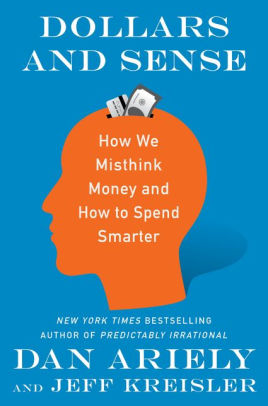
Comedian Jeff Kreisler and his co-author, behavioral economist Dan Ariely, take on the widely held belief that sales save you money in their new book: “Dollars and Sense: How We Misthink Money and How to Spend Smarter,” which challenges a lot of financial assumptions.
Singletary explains: "The authors argue that when we see a sale, we should ignore what the item used to cost. It’s irrelevant. Instead, what we should be doing is considering what else we should or could do with the money we might spend on the sale item."
“Think about transactions in terms of opportunity costs by considering more explicitly what we’re sacrificing for what we’re getting,” they write. “Buying a $60 shirt marked down from $100 isn’t ‘saving $40’; it is spending $60.”
Read more at:https://www.washingtonpost.com/news/get-there/wp/2017/12/28/why-the-money-conscious-should-beware-the-after-christmas-sale/?utm_term=.52c40cad8d8e
or read the authors' new book: Dollars and Sense: How We Misthink Money and How to Spend Smarter
Dollars and Sense: How We Misthink Money and How to Spend Smarter

April 11, 2016

Just pay cash!

To save money, skip the plastic!
Research shows that using credit and debit cards prompt consumers to spend up to 18% more compared with cash. "Here is a challenge: For just one week, pay for everything with cash," writes Mellody Hobson. "Dinner with friends? Cash. Your weekly manicure? Cash. Filling up at the pump? You're paying cash."
"The added expense comes down to psychology. Putting a purchase on a card doesn't quite feel like spending money. There is no cash withdrawal, and no dwindling stack of bills in your pocket. Plastic is just so easy! Not to mention, there are all of those incentives -- points, cash back, online discounts." Read all about it: http://www.cbsnews.com/news/mellody-hobson-to-save-money-skip-the-plastic/

January 19, 2016

Did you overspend on Christmas and the Holidays?

The Institute of Consumer Financial Education has 10 steps to help you cope the bills coming in from holidays. Read their advice at: http://icfe.info/broadcasts/broadcast1601.html

January 18, 2016

Time to reboot your financial life? Try this 21-day fast

It's far enough along in the new year that many of the New Year's resolutions have fallen by the wayside.  Now is the time to hit the reset button. Washington Post financial columnist Michelle Singletary provides a great structure for getting your finances under control. At the time when many of us need to lose the extra pounds added over the holidays and tighten our financial belts  to pay those credit card bills, a financial fast may just be the ticket. To help with the process check out Michelle Singletary's book, “The 21 Day Financial Fast: Your Path to Financial Peace and Freedom.”
The main idea is to put away the credit cards& the financial belt and simplify your life for 21 days don't spend anything extra beyond the necessities. Singletary provides guidance and support.  Shutting down all spending on anything other than absolute necessities for 21 days helps you focus and reassess really necessary. In order to change behaviors you need to stick to a plan that becomes habit. For more information read Singletary's column describing the 21 day fast:
http://wapo.st/22AtVyW

August 7, 2015

Having trouble making ends meet? You're not alone

Almost one in five Americans struggle to make ends meet. The good news is that in most cases spending can be controlled. Watch this video to learn more. http://www.finra.org/investors/video-making-ends-meet?utm_source=MM&utm_medium=email&utm_campaign=Investor%5FNews%5F072315%5FFINAL#sthash.LItKzIXx.dpuf
Check out the FINRA.org website for more financial information.
Almost one in five Americans struggle to make ends meet. The good news is that in most cases spending can be controlled. Watch our video to learn more. - See more at: http://www.finra.org/investors/video-making-ends-meet?utm_source=MM&utm_medium=email&utm_campaign=Investor%5FNews%5F072315%5FFINAL#sthash.LItKzIXx.dpuf
Financial Planning for Women does not sell, rent, loan, lease or otherwise provide any personal information collected at our site to any third parties.