Showing posts with label I-bonds. Show all posts

May 5, 2023

Series I bonds still ‘attractive for longer-term investors’ as annual rate falls to 4.3%


  • Series I bonds will pay 4.3% annual interest through October, a drop from 6.89% in November, amid falling inflation.
  • With the fixed portion of the rate at 0.9%, which stays the same after purchase, I bonds have become more attractive to long-term investors.
  • But shorter-term investors may consider alternatives, such as certificates of deposits and Treasury bills.

 by Kate Dore, CFP® 

Read the full article with details on the dual aspects of I-bond rates at: 

https://www.cnbc.com/2023/05/01/series-i-bond-rate-falls-to-4point3percent-through-october-how-it-compares-.html


April 20, 2023

I bond rates could drop below 4% beginning May 1

I bond rates could drop below 4% next month

The decline in inflation in March could mean lower rates for Series I bonds, experts say, with the yearly rate possibly dropping below 4% in May. That would be a big drop from the 6.89% return for bonds bought in April but still above the historical average.

https://www.bloomberg.com/news/articles/2023-04-12/i-bonds-interest-rate-for-2023-yield-is-expected-to-fall-below-4-in-may

BUT remember, if you buy bonds before April 30 you can o lock in the 6.89% rate for 6 months. Search this blog for other items about I-bonds to be sure you understand the options before committing your funds. You can access your money for the first 12 months. 

November 8, 2022

Series I Savings Bonds (I Bonds) are still a great deal

 Because Jonathan Clements explained I-bond interest so clearly I am quoting directly from his Humble Dollar weekly email. Sign up at his website: https://humbledollar.com/

BILLIONS OF DOLLARS poured into Series I savings bonds toward the end of October, as investors rushed to snag the 9.62% annualized rate then on offer, which was guaranteed for the first six months. But it turns out these folks were a tad too hasty.

How so? Buyers of I bonds are promised a pretax return equal to the inflation rate, plus they sometimes also get an additional fixed rate of interest, over and above inflation, depending on when they buy. For the past two-and-a-half years, that additional fixed rate of interest has been zero. Pretty much everybody—including me—assumed it would remain that way. After all, with inflation so high and with billions flooding into I bonds, why offer anything more than a fat inflation-driven yield?

But it turns out those sneaky folks at the Treasury Department had other ideas. For the I bonds sold during the six months starting Nov. 1, the annual fixed rate has jumped from zero to 0.4%. One possibility: Perhaps the Treasury Department did this because Treasury Inflation-Protected Securities, or TIPS, are now also offering higher real yields.

The result is that, for the first six months that today’s buyers own their I bonds, they’ll earn an annualized 6.89%. But what’s really guaranteed is 3.44% for six months, or 3.24% to compensate for recent inflation plus half of the 0.4% fixed rate. Thereafter, today’s I bond buyers will get a return equal to the inflation rate, plus 0.4% a year.

What if, instead, you’d bought in October? You would pocket an annualized 9.62% for the first six months, equal to 4.81% for that six-month period. That’s better—1.37 percentage points better, to be precise—than the 3.44% that November’s buyers will collect during their first six months.

But after the initial six months are over, things start to change. October’s buyers will get a yield equal to the inflation rate, while November’s buyers will get inflation plus 0.4% a year. It won’t take many years for today’s buyers to catch up with October’s buyers, and thereafter they’ll pull further and further ahead.

All this carries something of a sting. Why? You’re limited to buying $10,000 of I bonds per year, plus another $5,000 using your federal tax refund, assuming you owe that much. On top of that, you can’t sell savings bonds in the first 12 months and you lose the last three months of interest if you bail out in the first five years. Still, October’s remorseful buyers will get another chance in 2023—when they can invest $10,000 more.

SavingsBonds.com Reacts to Presidential Inauguration - Suggests Revisiting Paper Savings Bonds

April 18, 2022

Series I (inflation adjusted) U.S. savings bonds will pay almost 10% beginning May 1, 2022

Yes, higher prices are a drag but why are you leaving your savings in 0.05% (or less) savings accounts? 

Inflation-adjusted U.S. Savings Bonds are the best way to beat inflation. Currently these bonds are paying 7.12% (through April 30); the rate will escalate to 9.6% May 1. Generally one is limited to buying a maximum of $10,000 of I-bonds each year but you get get up to $5,000 more if you purchase bonds with your income tax refund (but only if you are owed a refund). 

If you purchase I-bonds with a federal tax refund you will be issued paper bonds. All other direct purchases of I-bonds are in electronic form through a Treasury Direct account. Tax-refund I-bonds are available in $50 increments and you can decide how much to buy and have the rest of your refund deposited in your bank account. You can convert paper bonds to electronic form via the Treasury Direct website: https://www.treasurydirect.gov/. Details on I-bonds are at: https://www.treasurydirect.gov/indiv/research/indepth/ibonds/res_ibonds_ibuy.htm.

Review the basics by searching this blog for I bonds. 

February 15, 2022

Dealing with Inflation's effect on savings

The consumer-price index jumped 7.5% in January compared to a year earlier, its steepest rise since February 1982, the Labor Department reported. The core price index, which excludes energy and food prices, rose 6% year over year, also marking a nearly 40-year high.

Savings accounts are paying far less than 1%. It's time to check out I-bonds, US government savings bonds that track inflation. Series I Bonds bought through April 30, 2022 are paying 7.12%. Rates change each May 1 and November 1. Based on recent CPI  inflation statistics, I bond rates are likely to continue to pay robust yields. Besides being backed by the US government and keeping up with inflation, I bonds offer income tax advantages. 

One option for investors concerned about elevated inflation is to use a portion of their tax refund to acquire paper I bonds. This can be accomplished using Form 8888.

Search for I-bonds on this blog for full details. 

Free photos of Calculator


June 5, 2021

U.S. Government I Bonds (inflation protected) are the best savings option you probably have never heard about


"In today’s yield-parched world, money-market funds are paying 0.02%, bank savings accounts 0.13%, a three-month Treasury bill 0.015% and even a 30-year Treasury bond only 2.25%." Wall Street Journal writer Jason Zweig reminds us of one of the best kept secrets for savers; I-Bonds. These savings instruments are inflation-protected U.S. savings bonds that are currently paying 3.54% for bonds issued May 2021 – October 2021. I bonds are almost risk-free and offer significant tax advantages.

"The maximum purchase is $10,000 per year per account holder (unless you elect to take your tax refund in the form of an I bond)."

"Ironically, the less you earn and have to invest, the more powerful a tool I bonds are."

Never heard of I-bonds? Maybe because "financial advisers have no incentive to sell I bonds, which don’t pay commissions or charge expenses and are available exclusively from the U.S. government (see TreasuryDirect.gov)" 

"Their yield consists of a fixed rate for the 30-year life of the bond and an inflation rate, which adjusts semiannually. The current 3.54% applies to I bonds issued until Nov. 1, 2021 and will reset every six months unless the official government rate of inflation stays constant."

While the yield can decline if inflation drops (not likely in coming years according to my reading of the WSJ). "But, unlike with Treasury inflation-protected securities, or TIPS, the yield on I bonds can never go below zero. So they protect against both inflation and deflation."

Interest on I bonds is exempt from state and local income tax! So especially appealing for residents of high tax states. "For income-tax purposes, you can choose to defer declaring your I-bond interest until maturity or you redeem, whichever comes first." 

Some caveats: You can't access your funds for first 12 months. If you cash out before 5 years, you lose 3 months of interest. "If you buy an I bond at today’s 3.54% rate and sell it one year and a day from now, you’ll earn 2.65% after the penalty (assuming the rate doesn’t change). That’s roughly quadruple what you’d get from a one-year certificate of deposit or ultra-short-term bond fund."

I bonds are ideal for emergency savings. You don't get monthly or yearly reminders about your account so it's "out of sight, out of mind" so you're not tempted to used the money for less than an emergency.  They are also well-suited for short term goals where you want to be sure your money grows and you can't lose purchasing power. 

Thanks to Jason Zweig for this timely reminder about a great addition to one's portfolio. Check out his website and his books: https://jasonzweig.com/

For more details see: https://www.treasurydirect.gov/indiv/products/prod_ibonds_glance.htm


November 6, 2018

I-bond rate increases to 2.83%


The current interest rate on I-bonds: 2.83% for bonds issued November 2018-April 2019.

https://www.treasurydirect.gov/indiv/products/prod_ibonds_glance.htm
This is an increase from 2.52% for the previous 6 months. 
Learn about I-Bonds: 
Rates & Terms

  • I bonds have an annual interest rate derived from a fixed rate and a semiannual inflation rate.
  • Interest, if any, is added to the bond monthly and is paid when you cash the bond.
  • I bonds are sold at face value; i.e., you pay $50 for a $50 bond.


Redemption Information

  • Minimum term of ownership: 1 year
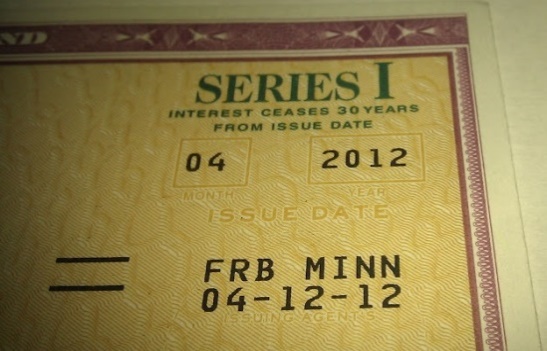
  • Interest-earning period: 30 years
  • Early redemption penalties:
    • Before 5 years, forfeit interest from the previous 3 months
    • After 5 years, no penalty


Tax Considerations

  • Savings bonds are exempt from taxation by any State or political subdivision of a State, except for estate or inheritance taxes.
  • Interest earnings are subject to Federal income tax.
  • Interest earnings may be excluded from Federal income tax when used to finance education (see education tax exclusions).

Financial Planning for Women does not sell, rent, loan, lease or otherwise provide any personal information collected at our site to any third parties.