Showing posts with label stocks. Show all posts

December 27, 2022

How did stocks perform in 2022?

 Overall, the S&P 500 fell by 19 percent in 2022.

It will probably be one of the 10 worst performing years for the stock index in at least 90 years.

But keep in mind that you probably started investing in stocks well before January 2022. Look at your returns over the long run before panicking.

Because a major stock index is down almost 20% now is a great time to invest for long term goals like retirement. We've all heard the advice "buy low, sell high." Now is a chance to buy when prices are low (relative to the recent past). 

Rather than trying to time the market, set up a regular automatic monthly deposit into your investment and retirement accounts. No one can consistently time the market by guessing exactly when to buy and sell.

This is what we mean when we say stocks are "risky." Actually it's more accurate to say that stock prices can be very volatile. That's why you don't want your emergency reserve funds, or money you expect to need in the next 3-5 years, held in stocks.

I bonds, U.S. Government inflation-adjusted bonds are a great place for your emergency savings, vehicle replacement fund, and other short to medium range goals. 

Just be glad you didn't buy Tesla stock at its peak in November 2021. The stock has lost 70% of its value since then. Another good reason to have a widely diversified investment portfolio. Don't put all your eggs, or even most of them, in one basket. 

The S&P 500 is up 19 percent since 2020!

 If you want to feel better about your investments, you’ll need to go back to the start of 2020. Stocks have rebounded considerably from the brutal bear market at the start of the pandemic.

Graph, Trading, Stock Market, Chart


November 8, 2022

50 Years Later, Burton Malkiel Hasn’t Changed His Views on Indexing

 Burton Malkiel, the author of the classic book A Random Walk Down Wall Street still believes that individual investors can't "beat" the stock market. 

Writing for The Wall Street Journal, Daniel Akst:

'FIFTY years ago this January, an economist named Burton Malkiel published a book calling for an innovation on behalf of the small investor. “What we need,” he wrote, “is a no-load, minimum-management-fee mutual fund that simply buys the hundreds of stocks making up the broad stock-market averages and does no trading from security to security in an attempt to catch the winners.”'

"Dr. Malkiel, 90 years old, still says index investing beats other approaches, and he has half a century of additional data to bolster his case, which he does in a 50th anniversary edition of the book to be published in January. By now an investing classic, “A Random Walk Down Wall Street” has been updated to cover the many financial innovations (from exchange-traded funds to Ethereum) since it was first published. The book retains its author’s trademark blend of erudition and wit—and his insistence that markets really are efficient." 

DR. MALKIEL:  "Each year about two-thirds of active managers underperform the index, and those who outperform in one year are not the same as those who outperform in the next. S&P does something called Spiva, in which they compare the S&P indexes with active managers. And what it shows is that over a 10-year period, roughly 90% of domestic stock funds, for example, are outperformed by the index." (S&P: Standard and Poor's)

WSJ: You advocate indexing, dollar-cost averaging and diversification, and you make mincemeat of such practices as technical analysis, ESG and “smart beta.” You see cryptocurrencies as too risky. 


February 7, 2021

Tax implications for stock day traders

 Game Stop and the Robinhood trading app have been in the news lately. 

As we enter income tax filing season, day traders (People who buy and sell stocks on a daily basis resulting in short term losses and gains) will face the challenges of figuring out their gains and losses and the tax implications of their activities. 

As The Wall Street Journal's tax expert Laura Saunders writes: "Robinhood made the market feel like a game; the IRS hasn't followed suit." one of the day traders that Saunders describes in her article made about $8,000 on his trades last year. His IRS 1099 form summarizing a small portion of his trades is 34 pages long! "It's so convoluted, I have no idea what it means" reported the taxpayer in question. He expects hundreds more pages of tax forms and will have to hire a professional preparer this year. I wonder how much that will cost!

So the next time a friend brags or you read about 20 somethings making big profits in the stock market by day trading, remember the tax consequences and the cost of professional tax preparation. 

Main points: 

  • Investment income is taxed very differently from earned income. 
  • Long-term vs. short-term capital gains are treated differently
  • The tax code allows investors with losses to offset capital gains up to $3,000/year
  • Capital losses can't offset gains if the investor buys the same holding within 30 days
  • If you've been day trading don't expect to prepare your return yourself; expect to pay a professional preparer a lot of money to deal with hundreds of pages of Form 1099-B.

June 16, 2020

The "Perfect Storm of Stupid" and other Coronavirus stock market theories

Why has the stock market gone up dramatically (after initial plunge) during a pandemic?
Some ideas... courtesy of Planet Money

The “Perfect Storm of Stupid” Theory

Basically, Americans are super bored. They’re at home. Sports are canceled. The kids are screaming. The casinos are closed. And around 800,000 additional people have decided to plop down money on the biggest roulette table of them all: the stock market. Bloomberg columnist Matt Levine calls it “the boredom markets hypothesis.” Business Insider columnist Linette Lopez calls it “the perfect storm of stupid.” Shiller didn’t shoot this theory down. “This is just speculation," Shiller says, "but it seems like people want to do something.”

Some other theories:
The Corporate-America-Is-Immune-From-Pain Theory

"The stock market represents only a fraction of the economy: publicly traded corporations. While restaurants, mom-and-pop shops, and other small businesses have clearly been hammered, the majority of them are not listed on the stock market."


The Fed Theory

"This theory says the Fed is using its unlimited money-printing machine to single-handedly prop up the stock market."
The FOMO Theory
The fear of missing out is a prominent motivator for investors

The TINA Theory 

Then there is the “There Is No Alternative” theory, aka TINA. It basically says that with interest rates so low, stocks are the only money-making game in town. 

The Efficient Market Theory

"It paints the stock market as a supermachine for information processing, where knowledge about the happenings of the world are all aggregated by brainiac investors, who rationally buy and sell stocks based on the best information of their future performance. The theory basically says stock prices are always right. Under this theory, the rally of the stock market over the last few months reflected rational investors seeing signs that the pandemic wouldn’t be too bad and that the recovery was going to be really good."

Source: https://www.npr.org/sections/money/2020/06/16/877410547/what-is-the-stock-market-trying-to-tell-us?utm_source=npr_newsletter&utm_medium=email&utm_content=20200616&utm_term=4623696&utm_campaign=money&utm_id=44131415&orgid=
 

June 1, 2020

What's happening in the stock market during coronavirus?

    THROUGH THE END OF MAY - The S&P 500 is down 5.0% YTD (total return) through 5/29/20. Just 121 stocks in the index are up YTD. The S&P 500 consists of 500 stocks chosen for market size, liquidity and industry group representation. It is a market value weighted index with each stock's weight in the index proportionate to its market value (source: BTN Research).  

TRILLIONS - From its 2/19/20 stock market high, US stocks lost $12.7 trillion in market capitalization through the stock market low close on 3/23/20. From its 3/23/20 low point, US stocks have gained $8.8 trillion in market capitalization through the close of trading last Friday 5/29/20 (source: Wilshire).   Source:

David Swapp, CFP®
801-566-6639 | david@networthadvice.com
Bottom line: DON"T try to time the market. Decide on your long term goals and tolerance for variability and stick with your chosen asset allocation.  

April 17, 2020

Why is US stock market doing OK while the economy is tanking?

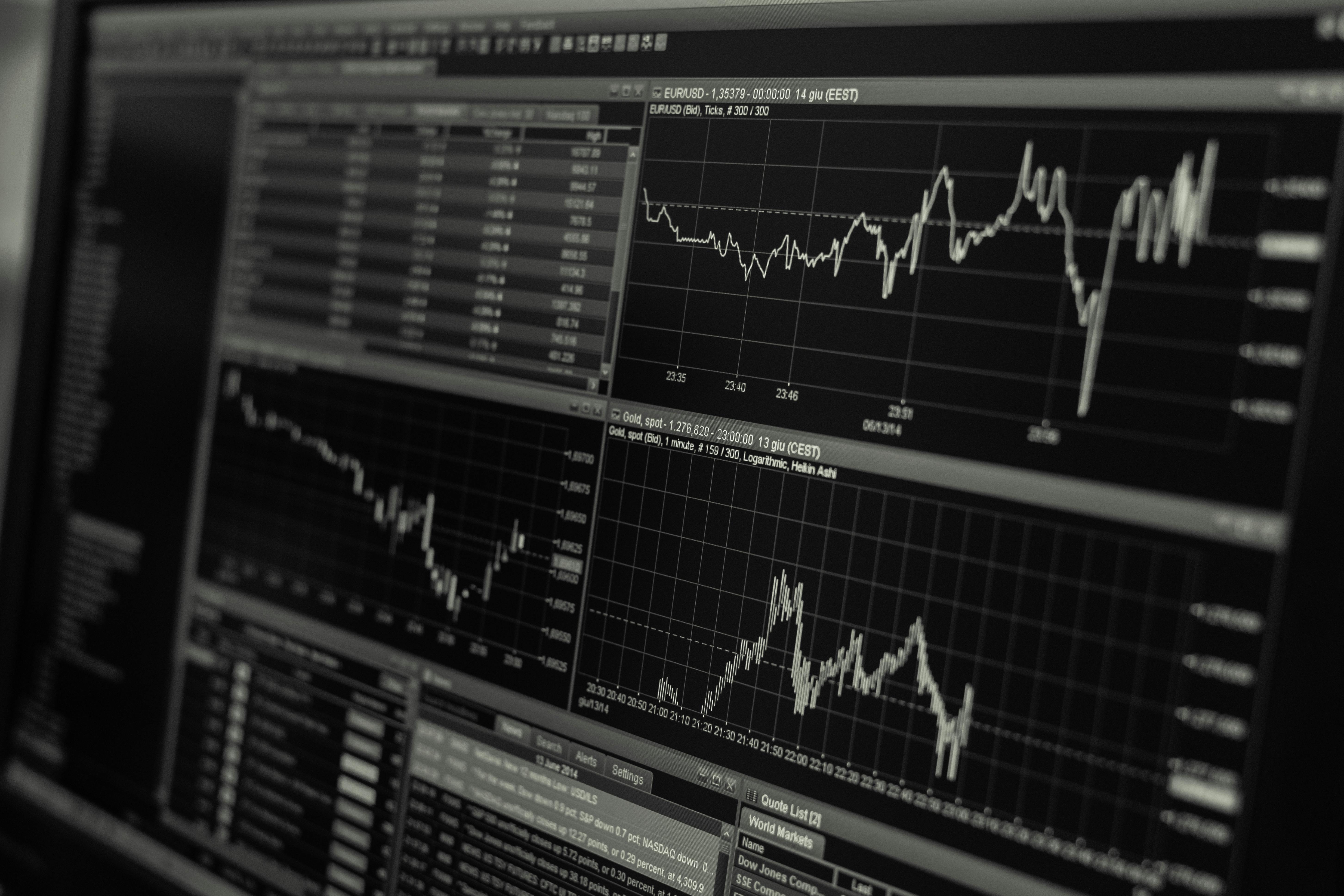
https://www.pexels.com/photo/black-and-white-business-chart-computer-241544/
Investors worldwide are looking past economic data and coronavirus statistics to seek haven in US equities. Emerging-market equities are the cheapest against the S&P 500 in 12 years, while the MSCI USA Index is near a 20-year high against the rest of the world.
Full Story: Bloomberg (tiered subscription model) (4/16) 

March 20, 2020

Stock Market Volatility

The wild swings in the financial markets are enough to scare any investor. With huge drops followed by big gains and then further drops... what is an investor to do?
First let's review what's happening. It is NOT individual investors making buy/sell decisions that drive financial markets. It's the computerized models of the major investment houses that are driving the crazy swings in prices. It is not an individual fund manager making buy/sell decisions. The computer models make trades automatically without human intervention. So even though commentators and media reports refer to what "investors" are doing, it's really the computers.
So, knowing that's what's driving volatility, it's time to review your financial goals, time lines and consider your risk tolerance. As I've tried to emphasize, no money that you expect to need in the next 5 years should be in the stock market! Shorter term goals should be accomplished with less volatile investments and savings products. Online savings accounts are a good home for your short term goals.

Even if you are on the verge of retirement, DON'T FREAK OUT! While you may plan to retire shortly, your investment horizon for retirement is about 30 years. Yes, you need some money in secure savings/conservative investments, but not all of it... even if you hope to retire shortly. You need to be invested in stocks for the long run to keep ahead of inflation.

Think about target date retirement funds (learn about them by searching this blog). They start out for young investors with most of the investments in stocks. Target date funds gradually and automatically get more conservative as the proposed retirement year approaches. Same concept applies to 529 Education Savings Plans like Utah's 529: https://my529.org/. The 529 age-based savings plans start with high percentages in stock and move to almost all fixed income savings options as college age nears.

If you cash out your stock investments now during the wild market swings you will only lose money by locking in losses that were only numbers on paper.

DON'T focus on year to date (YTD) returns. It's early in the year and we started the year hear the end of an 11 year long bull market in stocks. Think about where you started.

March 14, 2020

Stock market perspective

IS THE STOCK MARKET swoon messing with your head? You don’t want to make this market decline any worse than it has to be. To that end, here are 10 steps that’ll help preserve your sanity and your portfolio:
(Quoted directly from Jonathan Clements.  Follow Jonathan on Twitter @ClementsMoney and on Facebook. His most recent articles include Bad NewsDon’t Lose It and Stand Your Ground.)
https://humbledollar.com/2020/03/grin-and-bear-it/
I highly recommend his website and weekly emails.

  1. Avoid touching both your face and leveraged exchange-traded index funds.
  2. Change the password on your investment accounts to “ItsTooLateToSell.”
  3. Downgrade your opinion of investors based on their degree of hysteria.
  4. Don’t watch Contagion, Margin Call or the New York Knicks.
  5. Quarantine your emotions every time the Dow drops 1,000 points.
  6. After your brother-in-law finishes pontificating, ask whether he inherited his clairvoyance from his mother or his father.
  7. Avoid contact with insurance agents pitching equity-indexed annuities. Don’t shake hands with brokers on any deal that promises downside protection.
  8. Unless you live in a ranch-style house, stay away from open windows.
  9. Wash your hands for 20 seconds after watching CNBC.
  10. Use the vacation fund to buy stocks. Mention it to your spouse after he’s had a few drinks.

March 10, 2020

Volatility: Financial markets are going crazy... what to do now

With the wild swings in financial markets, how concerned should you be about your investments?
First, remember that any money you expect to need within the next five years should never be invested in the stock market!
This is not like the 2008 financial crisis. It's been an 11 year bull market so too many investors have forgotten that stocks fall as well as rise.
If you panic and sell stocks now you are locking in "paper" losses. Remember buy low and sell high?
Now is a good time to stuff some money into your IRA, 401(k) or other retirement/long term goals accounts.
While the long term trend in the stock market is upward, short term ups and downs come unexpectedly and dramatically. If you choose to cash out and expect to wait until the investing news is good again... you've missed our on dramatic short term increases. You will have sold at a low point (locking in losses) and bought again at high prices, missing out on the benefits of long term stock investments.
So don't panic!
Now is a good time to reassess your tolerance for risk (volatility) and consider your time horizon. It is appropriate to invest in stocks for the long run and have shorter term (less than 5 year) money in more conservative investments or online savings accounts or CDs. Research confirms that investors' risk tolerance (as they perceive it or as shown by risk questionnaires) is high during bull markets and plunges during bear markets.
Are you diversified within and across asset categories? Low-cost index funds are the way to go, both for stocks and bonds and domestically and internationally. 
Review historical rates of return from various stock/bond allocations at:

BUT don't expect such robust rates of return in the future, especially considering the ultra low returns on bond investments. 

February 26, 2020

Stocks are Risky; Pre-retirees and Retirees Must Consider your Time Horizon

The large drops in the stock market over past few days related to the coronavirus epidemic should be a wake up call to investors. Let's review some basic principles of investing.
Remember that your time horizon for retirement investing is the rest of your life and you may live to be 95 or 100!
Selling stocks when the market drops locks in permanent losses.
Stocks often rise and fall dramatically in very brief spurts in reaction to global events. Stock markets do NOT rise and fall in nice steady steps. Dramatic drops and increases are the norm. NO ONE can predict when these dramatic ups and downs will occur!
Stocks are investments for the long run. No money that you will need in the next five years should be invested in stocks. Funds needed in the short run should be set aside in safe places like savings, CDs, money market funds, I-bonds, T-bills, and corporate bonds.
The Bucket Approach to investing takes into consideration the time-related needs of investors. Money needed in the next 1-3 years (depending on your risk tolerance) should be in safe places that will not lose nominal value. Funds expected to be needed in 3-5 years can be invested conservatively in dividend paying stocks, high quality bonds, and other conservative investments.
Funds for the long run (over 5 years) should be invested for growth in the stock market.

This strategy is specific to the retirement decision for pre-retirees (within 5 years) and persons in retirement.

SO:
Investors in the accumulation phase and more than 5 years from retirement should review their asset allocation and rebalance yearly.
Investors nearing retirement should institute a bucket approach for their investments, even if they also have a pension.
Investors in retirement: the recent market plunge should be a wake-up call to carefully review your retirement income plan. DON'T PANIC! If you sell your stocks today your are locking in permanent losses. We went through this with the global financial meltdown in 2008-09. Have investors learned from that experience?

Benefits of a bucket approach:
Predictability and peace of mind.
You can tap assets and still generate portfolio growth. 
Considerations: 
You need to be disciplined about generating a set return sufficient to meet your retirement needs. 

Read all 3 articles below for slightly different perspectives on time horizons for the 3 buckets. 

See: How to Use the Bucket Approach to Make Your Retirement Savings Last by pete Woodring

https://www.kiplinger.com/article/retirement/T037-C032-S014-bucket-approach-make-your-retirement-savings-last.html
"The bucket approach is an effective way to mitigate sequence and longevity risk. The general idea is to set up three or more distribution “buckets,” with different asset classes and different time horizons for liquidation. Note that the time horizon for the 3 buckets will differ depending on the author. This article takes a very conservative approach by allocating stocks to time horizons of 10 years of more. 

The Pros and Cons of a Bucket Savings Strategy by Rebecca Lake https://money.usnews.com/investing/investing-101/articles/2017-11-10/the-pros-and-cons-of-a-bucket-savings-strategy Retirement investors should have "now," "soon" and "later" buckets.  "The bucket strategy can insulate your retirement portfolio from sequence risk and longevity risk. The former refers to the risk of earning lower or negative returns early on when withdrawing retirement assets. The latter simply means outliving your savings."

What Is The "Bucket" Approach Strategy To Retirement Income Planning? by Jamie Hopkins https://www.forbes.com/sites/jamiehopkins/2019/04/25/what-is-the-bucket-approach-strategy-to-retirement-income-planning/#7b09608539d6


January 24, 2020

What kind of returns can you expect on your investments?

So many investment articles, personal finance textbooks, online calculators, and advisors plan for future returns to be similar to past returns. Much of the research I've been reading over the past few years suggests a very difference future with much lower returns than historical levels. Recent low levels of bond returns due to low interest rates are a factor.
"A MFS Investment Management report predicted that a hypothetical portfolio of 60% equities and 40% bonds could see a 10-year annualized return of about 3.6%, compared with 7.2% seen over the past decade." (Retirement Security Smartbrief, 1/24/20).

According to Jon Barry, senior retirement strategist at MFS:
On the equity side, “We feel good about sales growth and dividends, but we don’t feel as good about corporate margins and profits and just valuations in general,” he says. “Stocks are trading at a very high price-to earnings ratio, and we don’t see that as sustainable. With the trade wars, and as unemployment remains low and wage growth cuts into margins, companies will be restrained.”As for fixed income, Barry says, “Rates are historically low, and we don’t see anything in the near term that will make rates move higher in a meaningful way. Starting yields are a good predictor of where returns will be. Treasuries are yielding around 2%, and it’s not unreasonable to expect the same,” he says. 
https://www.plansponsor.com/consider-conservative-investments-pre-retirees-hold/

So please be realistic when projecting future investment returns as you plan for retirement and other financial goals. 

January 22, 2020

Stocks are over-valued

Stocks are the most overvalued since at least the 1980s based on one measure

"The price-earnings to growth ratio, which gauges whether a stock is properly valued, is at the highest reading since Bank of America tracking began in 1986. Anything above 1 indicates overvaluation, and the ratio is at 1.8."
https://www.cnbc.com/2020/01/16/stocks-are-the-most-overvalued-since-at-least-the-1980s-based-on-one-measure.html

At least once a year investors are urged to review their asset allocation. As stock prices are at an all time high in the longest bull market in history... NOW is the time to evaluate and rebalance your portfolio. For investors nearing retirement and those in retirement in particular: Sell some stocks to take your profits and buy undervalued sectors of the market.
Of course, keep in mind your life stage. Young investors in their 20s, 30s, and 40s should maintain a large percentage of their retirement assets in stocks. But be sure you are diversified in low cost domestic and international index funds.

August 29, 2018

Stock Market Volatility

Is the stock market more volatile today than in past decades?
Ray E. LeVitre, Investment Adviser, CFP, Founder, Managing Partner at Net Worth Advisory Group addressed this question on July 5, 2018.
"Today it’s not uncommon to have the Dow Jones Industrial Average, a measure of large U.S. company stocks, swing up or down 100 points in a day. In fact, it’s not uncommon to have moves of 200-300 points in a single day. That sounds volatile, right? However, when we dig deeper we find there is more to the story."
LeVitre explores the numbers and provides tables to demonstrate his findings that
"current stock market volatility is similar to that of the past." So... "why does it feel so much more volatile? The reason is actually quite simple. The index is much larger now, so a 1% move up or down represents a far greater number of points."
Check out the numbers at: https://www.kiplinger.com/article/investing/T047-C032-S014-is-the-stock-market-more-volatile-now-than-ever.html 

January 18, 2018

Where would the stock market be if Hillary had won?

Trump likes to take credit for the stock market gains during his first year in office but analysts disagree. As James Mackintosh explains in The Wall Street Journal, January 18, 2018
"Many of the market-moving changes since the U.S. presidential election would have been just the same. Most important among them: The global economic rebound started before voters picked Mr. Trump, and would surely have continued. That rebound has driven up stocks and bond yields world-wide, and the U.S. is only in the middle of the performance table. From the day before the election, Italy, France, Germany and emerging markets have beaten U.S. stocks in dollar terms, including dividends, while Canada lags well behind."

Mackintosh concludes in Streetwise: "America under Mrs. Clinton would have had no corporate tax cut and no deregulation, and probably be a bit less lucrative for investors. But it would be wrong to give Mr. Trump much credit for the faster economy last year, and it is many years too early to know if his policies will provide a lasting boost."

June 29, 2017

How to Protect Your Retirement Savings From a Crash


"Since the market hit rock bottom about eight years ago, it has been steadily improving, and investors have seen skyrocketing stock prices and annual returns. Unfortunately, those spectacular averages won't last forever, and the investment pros have some pretty pessimistic predictions for the future," according to Katie Brockman writing for The Motley Fool.
"So what can you do to protect your retirement savings in the event that the market crashes?"
1. Check that your investments are aligned with your risk tolerance
2. Don't invest anything you'll need within five years
3. Eliminate as much debt as possible
4. Prepare for the worst


Financial Planning for Women does not sell, rent, loan, lease or otherwise provide any personal information collected at our site to any third parties.