Showing posts with label income tax refund. Show all posts

April 18, 2022

Series I (inflation adjusted) U.S. savings bonds will pay almost 10% beginning May 1, 2022

Yes, higher prices are a drag but why are you leaving your savings in 0.05% (or less) savings accounts? 

Inflation-adjusted U.S. Savings Bonds are the best way to beat inflation. Currently these bonds are paying 7.12% (through April 30); the rate will escalate to 9.6% May 1. Generally one is limited to buying a maximum of $10,000 of I-bonds each year but you get get up to $5,000 more if you purchase bonds with your income tax refund (but only if you are owed a refund). 

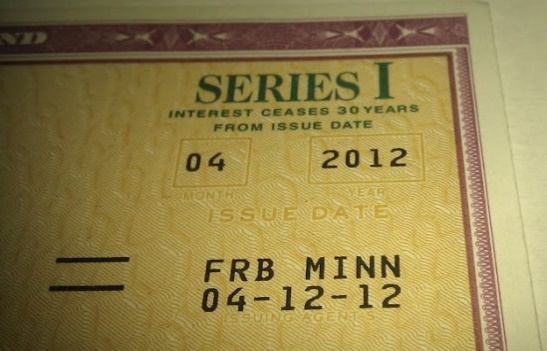
If you purchase I-bonds with a federal tax refund you will be issued paper bonds. All other direct purchases of I-bonds are in electronic form through a Treasury Direct account. Tax-refund I-bonds are available in $50 increments and you can decide how much to buy and have the rest of your refund deposited in your bank account. You can convert paper bonds to electronic form via the Treasury Direct website: https://www.treasurydirect.gov/. Details on I-bonds are at: https://www.treasurydirect.gov/indiv/research/indepth/ibonds/res_ibonds_ibuy.htm.

Review the basics by searching this blog for I bonds. 

February 27, 2022

2021 Federal Taxes: Expanded child Tax Credits and Child-Care Flexible Spending Accounts

 Q: (True or false): Taxpayers who got direct deposits of 2021 child tax credits last year could have lower refunds or higher taxes due than expected on returns they’re preparing now.

A: True. Millions of taxpayers received partial prepayments of expanded child credits for 2021 last year via direct deposit. As a result, these amounts won’t be available to boost refunds or lower a tax balance due, and many filers could be in for bad surprises when they complete their 2021 returns.

Q: (True or false): I underfunded the child-care Flexible Spending Account offered by my company last year because of pandemic uncertainties. But when the day-care center stayed open, I spent thousands of dollars on child care and now I don’t get a tax break.

A: False. Just for 2021, Congress greatly expanded the child- and dependent-care tax credit so it applies to 50% of qualified expenses up to $16,000 for up to two children. Many parents aren’t aware of this expansion.

Thanks to Laura Saunders writing for The Wall Street Journal, Feb. 26-27, 2022.  

Free photos of Children

March 22, 2018

How NOT to spend your income tax refund... IF you receive a refund

"Gambling, investing in cryptocurrency or backing a friend's new venture are among the worst possible ways to spend a tax refund, writes Geoff Williams" in US News and World Report.See;

The 5 Worst Ways You Can Spend Your Tax Refund 

 Much better options: pay down credit card debt, pay down other debts like car loans and student loans. Build up your emergency fund by buying I-bonds with your refund. If you've already received your refund, wait until May 1 (for higher rates) and buy I-bonds directly from the U.S Treasury. Check out: https://www.treasurydirect.gov/indiv/products/prod_ibonds_glance.htm
Current  rates: 2.58% for bonds issued November 2017 – April 2018. Starting May 1 rates are likely to be higher because the Federal Reserve Board is raising interest rates as the economy recovers from the Great Recession.

April 4, 2016

Why you should slightly UNDER withold your taxes

Too many people take pleasure in getting a large tax refund. While I am aware that they are then more likely to do something useful with the large sum than if they were to get a slightly larger paycheck each month, tax scams are rising rapidly where scammers get your info (including Social Security numbers) and then collect your refund. It can take a lot of time and effort to resolve this problem. As reported in the April 4 Wall Street Journal, "An email scam targeting companies is putting huge amounts of individuals' tax information into the hands of criminals, potentially wreaking havoc on the victims' lives for years." The phisher impersonates "a company's high-ranking executive from a phony email address that"  fools staff in HR or payroll to forward W-2 or other tax information! Personally I think the employee who fell for this phishing should be fired! Stolen info is sold on websites to criminals who then "file fraudulent tax returns and collect the refunds." WSJ article by Robin Sidel. If you under withhold and have to pay taxes, there is no refund to steal. Just set aside the amount you will owe in an online savings account.

January 20, 2016

Earned income tax credit

Consumer Action has published the 2015 information about the earned income tax credit. "The Earned Income Tax Credit (EITC) helps low-to-moderate-income, working taxpayers get more money back when they file their federal income tax return. A tax credit means that you will be eligible for a larger tax refund because it reduces the amount of money you may owe the federal government." In addition he is available in Chinese and Vietnamese Spanish and Korean. Check out the information on their website at: http://www.consumer-action.org/english/articles/get_credit_for_your_hard_work_eng

January 11, 2016

Avoid tax traps & scams to put all of your refund to work building wealth


Mark your calendar for Wednesday, January 13 for the start of Financial Planning for Women for 2016. The topic is: Tips & Tricks for Saving Money with Taxes. The presenter is Karli Sproul, who works for H&R block. She is a graduate of the family finance program and an excellent and knowledgeable speaker.
Financial Planning for Women (FPW) is a monthly educational seminar that meets the second Wednesday of most months at two times: 11:30-12:30 p.m. in the USU Taggart Student Center room 336 (Bring a lunch), and at 7:00-8:30 p.m. at the Family Life Center, 493 North 700 East, Logan (at bottom of Old Main Hill). The longer evening time slot allows for more discussion. Programs are free and registration is not required. Men are always welcome. New attendees will receive copies of personal finance magazines.
Each time you attend FPW between January and March you get entered into a drawing for a free financial advising session; other prizes: Carl Richard’s book: the one-page financial plan and books on Social Security planning and managing your money in retirement.

March 30, 2015

Tax refund loans are TOXIC!

According to "Things you should know about tax refund loans," courtesy of the Financial Industry Regulatory Authority (FINRA), tax refund loans are a nightmare!
1. "You’re paying to borrow your own money. RALs are short-term loans issued by non-bank lenders—usually with terms of only 7 to 14 days—that are secured by your expected refund. Taxpayers who take out RALs receive cash, typically right away, in the amount of their anticipated refund, minus fees. In exchange, they agree to pay an interest rate that could, when expressed as an annual percentage rate (APR), add up to a triple-digit rate.
2. "You’re taking on risk. Like all loans, RALs come with risk, including an increased debt burden if your refund is denied, delayed or lower than expected. As costly as RALs can be in the short-term, they can be devastatingly expensive over the long-term should anything go wrong with your refund. Significant debt can pile up over time and hurt your credit score."
3. "RALs are expensive. RALs come with a number of fees, which may include a loan application fee as high as $100; a tax-preparation fee (around $40); a check-processing fee (around $20); a "peace of mind" guarantee from your tax preparer that you’ll get the refund cited on your tax form ($100 or more); and a refund account fee for services involved in setting up a temporary account (a minimum of $30). In addition to fees, RALs come with high rates of interest—generally starting at 36 percent and going up from there. Bottom line? Expect to pay a minimum of $200 on a $2,000 “fast” tax refund."
4. "You might encounter RALs in unexpected places. Businesses that prepare and file tax returns... aren't the only places that may pitch a RAL to you. Car dealerships, boat showrooms and furniture and electronics stores are among the many businesses that offer these loans."
5. "There are better alternatives. There are better, less expensive alternatives to RALs. The best move is to be patient and have the IRS send your tax refund free of charge. If you e-file and have your refund directly deposited, the IRS refund cycle can be as short as 8 days. In many cases, waiting only a few days or weeks can save hundreds of dollars."
Source:  http://www.finra.org/investors/5-things-you-should-know-about-tax-refund-loans?utm_source=MM&utm_medium=email&utm_campaign=Investor_News_032615_FINAL

As tax season speeds into high gear, put the brakes on "fast refunds" that come in the form of refund anticipation loans, or RALs. They’re a costly option thousands of taxpayers take, often without realizing just how expensive—and probably unnecessary—they really are.
Here are five things you should know about RALs, including alternatives that are cheaper and less risky.
- See more at: http://www.finra.org/investors/5-things-you-should-know-about-tax-refund-loans?utm_source=MM&utm_medium=email&utm_campaign=Investor%5FNews%5F032615%5FFINAL#sthash.ZTlgyL1i.dpuf

March 5, 2015

An extra $750 in your pocket

"American drivers are expected to save about $750 this year on gas, according to the latest government projections...." Even if your savings is half that amount you owe it to yourself to use the money wisely and not just let it slip through your fingers. Save half of what you pay each month for gas. If you pay for gas with a credit or debit card, look at your bills for the past few months. Add up the amounts spend on fuel and divide by two. Then put that amount to work by paying down consumer debt, boosting your emergency savings, or contributing to a Roth IRA. Since most Americans get an income tax refund amounting to over $2,000, there are no excuses for not boosting your financial security. Do it! Today! Stop procrastinating!

January 28, 2014

Earned Income Tax Credit


Earned Income Tax Credit.  Did you work and earn less than $51,567 last year? You could receive EITC as a tax refund if you qualify. Families with qualifying children may be eligible for up to $6,044. Use the EITC Assistant tool on IRS.gov to find out if you qualify. If you do, file a tax return and claim it.
Additional Child Tax Credit.  Do you have at least one child that qualifies for the Child Tax Credit? If you don’t get the full credit amount, you may qualify for the Additional Child Tax Credit. To claim it, you need to file Schedule 8812, Child Tax Credit, with your tax return. (from the IRS)

February 6, 2013

4 Reasons to Save your Tax Refund

Emily Brandon writes: "Your tax refund is likely to be one of the biggest paydays you will get this year. There are many benefits to saving at least part of your refund, and sometimes you can get additional perks if you save in specific ways. Here are some great reasons to save your tax refund:
Buy savings bonds on your tax return.
Get a tax break with your IRA.
Never pay taxes again with a Roth.
Win a prize. If you save part of your tax refund for the future you may become eligible to win a prize. The Doorways to Dreams Fund, a nonprofit organization aimed at improving the financial security of low and moderate income consumers, is giving away a $25,000 prize and forty $250 awards to tax filers age 18 and older who save at least $50 of their federal tax refund using IRS Form 8888 at SaveYourRefund.com."
Get more info at: http://money.usnews.com/money/blogs/planning-to-retire/2013/02/05/4-great-reasons-to-save-your-tax-refund
Financial Planning for Women does not sell, rent, loan, lease or otherwise provide any personal information collected at our site to any third parties.