"If 2019 is truly “the year we woke up to climate change,” then 2020 should be the year we start actually doing something about it. Because we are very nearly out of time."
Effortless Environmentalism
by Margaret Renki for The New York Times
"Think of these suggestions as baby steps on the path toward a growing commitment to change."
"Vote. The climate crisis is
the one issue that matters most in this election, and not just because
the survival of the human race depends on it."
"Reframe your relationship with bugs. Insects are the bread and butter of the natural world, but they are dying out. Think of your yard as ground zero of the entire local food chain."
"Cultivate a glorious mess.
Nature isn’t supposed to be tidy, and its messiness is purposeful.
Fallen leaves fertilize the trees they fell from and simultaneously
provide habitat for a whole host of insects, amphibians and reptiles."
KILL your leaf blower which is an environmental disaster due to noise and air pollution!
"Eat better. Agriculture accounts for about a third of greenhouse gas emissions,
primarily through deforestation, the use of petrochemical fertilizers
and methane production by livestock. To mitigate its effects, eat less
meat and fewer dairy products."
"Shop your closet. In addition to its manifold human costs, “fast fashion” — cheap clothing designed to be temporary in the age of Instagram — is a significant cause of environmental degradation."
"Put your money where your values are. Support a fierce environmental nonprofit through automatic monthly drafts"
"Pay for your sins. Avoiding
air travel is one easy way to lower your carbon footprint
significantly, but you can also buy carbon offsets for the flights you
can’t avoid."
"Lighten up on the plastic.
It’s almost impossible to avoid single-use plastics altogether, but a
one-time investment in reusable versions of your most frequent purchases
can reduce your dependence on them."
"Don’t hold yourself to an unrealistic standard of purity. Just as it’s O.K. to eat the birthday cake, it’s O.K. not to be a perfect steward of the earth."
Read the details:
https://www.nytimes.com/2020/01/13/opinion/earth-environmentalism.html?smid=nytcore-ios-share

Showing posts with label environment. Show all posts
Showing posts with label environment. Show all posts
February 3, 2020


February 2, 2020
How to make Climate Change Donations Count
"You bring your canvas bags to the grocery store. You walk to work. You’ve cut back on the hamburgers
(and the cheese plates, too). But you want to do more to fight climate
change. Specifically, you want to do more with your money."
"You could purchase carbon offsets. Or, you could support politicians who believe in climate change. Or, you could just donate to your favorite green nonprofit. But what makes the most sense?"
"Rachel Cleetus, an economist and policy director at the Union of Concerned Scientists, said she would first funnel her money toward politicians — both local and national — who would most likely be proactive when it comes to the climate."
Purchasing carbon offsets aren’t “changing the system as quickly as we need the system to change.”
I was surprised at the very small $ amounts to purchase carbon offsets for flying, one of the worst things we do to our planet. Since I first learned about the negative aspects of flying, I've bought carbon offsets each time I or my husband flies but the amount seems so puny that I've made an additional donation.
If you want to support non-profit organizations:
The Founders Pledge recommends the Coalition for Rainforest Nations and the Clean Air Task Force as the most cost-effective non-profit organizations. The report cited the groups’ past successes in fighting global deforestation and supporting clean energy innovation.
Info from The New York Times Climate Forward newsletter
October 27, 2019
Flying is bad for the planet: What can you do besides fly less?
Flying is one of the worst contributors to climate change. Yet Americans are flying more than ever. Granted that some flights are deemed necessary by the passenger... We recently flew from Salt Lake to Baltimore to attend my father in law's funeral which attracted family members who flew from Chicago, St. Louis, Savannah and SLC.
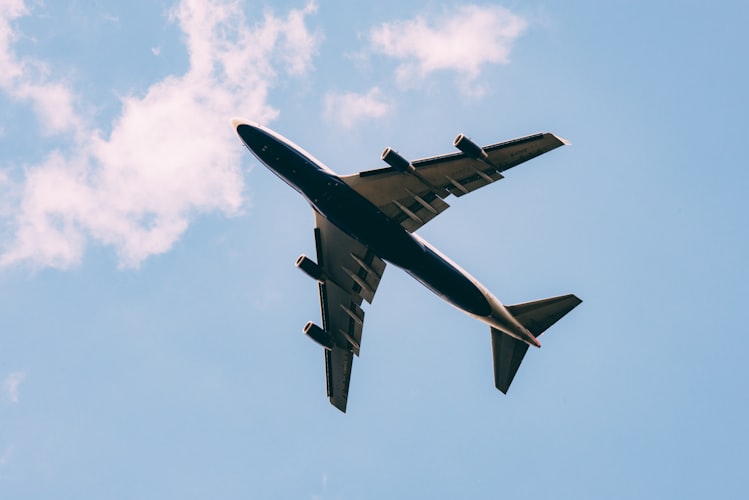 Greta Thunberg is a 16 year old internationally known Swedish climate activist who recently sailed to the U.S. for a climate conference rather than fly. Check out her TED Talk: https://www.ted.com/speakers/greta_thunberg
https://www.theguardian.com/environment/2019/jul/29/greta-thunberg-to-sail-across-atlantic-for-un-climate-summits
For a small fee you can buy carbon offsets to mitigate the impact of the climate change causing emissions. If you fly Delta or United go directly to the links below. Not sure why American Airlines has no carbon offset program. Time to boycott AA? If you are flying a different airline you can still get info the approximate impact and cost at Delta or United. The money does NOT go to the airlines but to organizations such as The Nature Conservancy that typically use the funds to plant trees or other activities to fight climate change.
Greta Thunberg is a 16 year old internationally known Swedish climate activist who recently sailed to the U.S. for a climate conference rather than fly. Check out her TED Talk: https://www.ted.com/speakers/greta_thunberghttps://www.theguardian.com/environment/2019/jul/29/greta-thunberg-to-sail-across-atlantic-for-un-climate-summits
For a small fee you can buy carbon offsets to mitigate the impact of the climate change causing emissions. If you fly Delta or United go directly to the links below. Not sure why American Airlines has no carbon offset program. Time to boycott AA? If you are flying a different airline you can still get info the approximate impact and cost at Delta or United. The money does NOT go to the airlines but to organizations such as The Nature Conservancy that typically use the funds to plant trees or other activities to fight climate change.
October 23, 2019
Flying is really bad for the environment and climate
" The Swedes call it “flygskam,” or “flying shame,” the movement that encourages people to stop taking flights to lower their carbon footprints.
But should most Americans really be ashamed of getting on a plane to see grandma this holiday season?
The short answer: Probably not. If your flights are purely a luxury, though, that’s another matter.
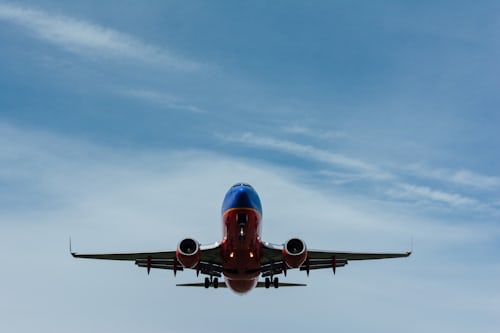 A small group of frequent fliers, 12 percent of Americans who make more than six round trips by air a year, are responsible for two-thirds of all air travel and, by extension, two-thirds of aviation emissions, according to a new analysis by the International Council on Clean Transportation, a nonprofit research group.
Each of these travelers, on average, emits more than 3 tons of carbon dioxide per year, a substantial amount, particularly by global standards. And the most frequent fliers, those who take more than 9 round trips per year, emit the highest share." by By Hiroko Tabuchi and Nadja Popovich writing for the New York Times Climate Forward newsletter.
The countries with the highest CO2 emissions from passenger flights in 2018:
U.S: Americans are responsible for 24% of all air travel and thus, 1/4 of all emissions from flying
China is #2 with 13% of all air travel emissions.
Japan is #3 with 3.1%
WOW! Americans are really the most polluting.
"So what’s to be done to curb frequent flying? One idea, floated by a group in Britain called A Free Ride, would tax fliers progressively: Everyone gets one tax-free return flight each year, and a tax kicks in at a low rate from the second flight. Taxes then ratchet up for each additional flight in that year."
And just this month, a Britain-based commission recommended banning air miles and frequent flier programs so that airlines do not “incentivize excessive flying.” The report cites data showing frequent fliers “strongly tend to be wealthier and less price-sensitive,” and recommends they should “incur increasingly powerful taxation to discourage additional flights.”
"Business travel makes up roughly 30 percent of air travel in the United States, according to data from Airlines for America, a trade group representing airlines. But some corporations are starting to question whether all of that travel is really necessary in an age of email, Slack and teleconferencing. In Europe, companies are starting to give extra time off to employees who opt to travel by train or other less-polluting transportation options on vacation."
If you must fly, then buy carbon offsets.
"Consider a trip from New York to Los Angeles. Flying 2,500 miles in economy class will burn about 0.29 metric tons of carbon per passenger, according to the International Civil Aviation Organization’s carbon emissions calculator. And it will cost about $3.26 to offset the approximately six hour, one-way flight using the travel offset calculator by Cool Effect, a nonprofit organization. If you round up to a full ton of carbon, you’d still only spend $3.30 to $13.18 on the Cool Effect website, depending on the project." By Jillian Mock and Hiroko Tabuchi writing for The New York Times Climate Forward Newsletter
Buy offsets (in Euros) at https://flygrn.com/offset-carbon
https://www.delta.com/en_US/about-delta/corporate-responsibility/carbon-emissions-calculator
https://www.united.com/ual/en/us/fly/company/global-citizenship/environment/carbon-offset-program.html
If you airline doesn't offer carbon offsets go to the Delta or United websites to estimate the cost and contribute on their website.
But should most Americans really be ashamed of getting on a plane to see grandma this holiday season?
The short answer: Probably not. If your flights are purely a luxury, though, that’s another matter.
A small group of frequent fliers, 12 percent of Americans who make more than six round trips by air a year, are responsible for two-thirds of all air travel and, by extension, two-thirds of aviation emissions, according to a new analysis by the International Council on Clean Transportation, a nonprofit research group.Each of these travelers, on average, emits more than 3 tons of carbon dioxide per year, a substantial amount, particularly by global standards. And the most frequent fliers, those who take more than 9 round trips per year, emit the highest share." by By Hiroko Tabuchi and Nadja Popovich writing for the New York Times Climate Forward newsletter.
The countries with the highest CO2 emissions from passenger flights in 2018:
U.S: Americans are responsible for 24% of all air travel and thus, 1/4 of all emissions from flying
China is #2 with 13% of all air travel emissions.
Japan is #3 with 3.1%
WOW! Americans are really the most polluting.
"So what’s to be done to curb frequent flying? One idea, floated by a group in Britain called A Free Ride, would tax fliers progressively: Everyone gets one tax-free return flight each year, and a tax kicks in at a low rate from the second flight. Taxes then ratchet up for each additional flight in that year."
And just this month, a Britain-based commission recommended banning air miles and frequent flier programs so that airlines do not “incentivize excessive flying.” The report cites data showing frequent fliers “strongly tend to be wealthier and less price-sensitive,” and recommends they should “incur increasingly powerful taxation to discourage additional flights.”
"Business travel makes up roughly 30 percent of air travel in the United States, according to data from Airlines for America, a trade group representing airlines. But some corporations are starting to question whether all of that travel is really necessary in an age of email, Slack and teleconferencing. In Europe, companies are starting to give extra time off to employees who opt to travel by train or other less-polluting transportation options on vacation."
If you must fly, then buy carbon offsets.
"Consider a trip from New York to Los Angeles. Flying 2,500 miles in economy class will burn about 0.29 metric tons of carbon per passenger, according to the International Civil Aviation Organization’s carbon emissions calculator. And it will cost about $3.26 to offset the approximately six hour, one-way flight using the travel offset calculator by Cool Effect, a nonprofit organization. If you round up to a full ton of carbon, you’d still only spend $3.30 to $13.18 on the Cool Effect website, depending on the project." By Jillian Mock and Hiroko Tabuchi writing for The New York Times Climate Forward Newsletter
Buy offsets (in Euros) at https://flygrn.com/offset-carbon
https://www.delta.com/en_US/about-delta/corporate-responsibility/carbon-emissions-calculator
https://www.united.com/ual/en/us/fly/company/global-citizenship/environment/carbon-offset-program.html
If you airline doesn't offer carbon offsets go to the Delta or United websites to estimate the cost and contribute on their website.
Subscribe to:
Posts (Atom)